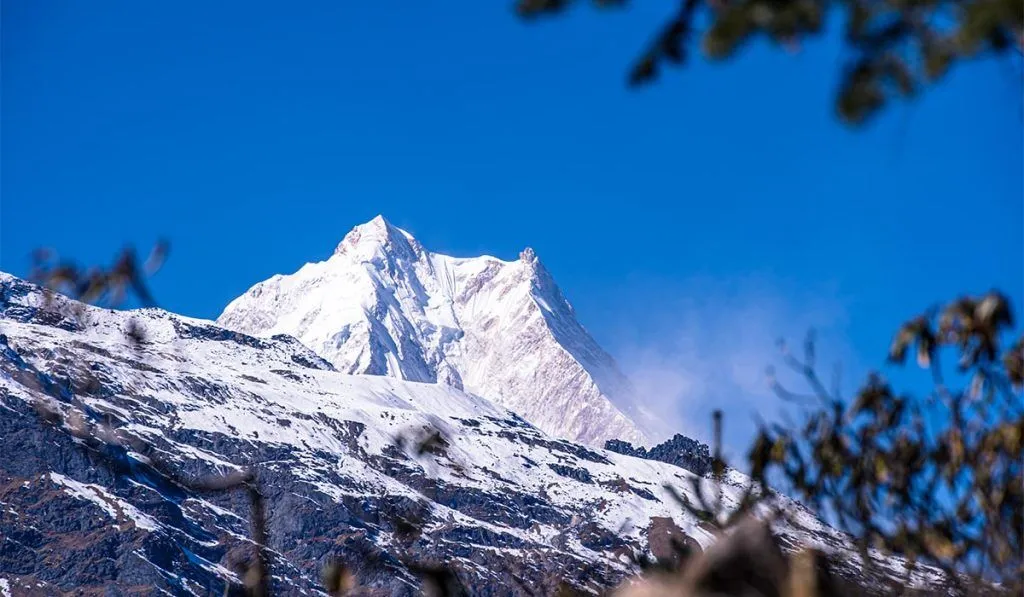
The Manaslu Circuit is often described as one of Nepal’s last truly remote trekking routes. And this trail deserves that reputation. This trail in western Nepal is far from the commercial crowds of Everest and Annapurna. It leads you to a region where people still live much like the way they have for generations. While navigating this off-the-beaten-path, you realize that life here moves at the pace of the mountains. Villages are small, and their traditions are strong and intact. Likewise, the rhythm of life still follows seasons.
Therefore, if you are among the trekkers who seek an experience beyond scenery, you should opt for the Manaslu Circuit trek. This journey offers a direct window into the authentic Himalayan life along the Manaslu trail.
Restricted Region and Remote Trail
The trail of the Manaslu Circuit trek lies inside a restricted region of Nepal. It limits the number of visitors entering this area and protects its cultural landscape. At the same time, this region is so isolated that the outside influences arrive slowly.
Therefore, as you walk from one village to another, you realize the self-sufficiency of these communities. Even the fields, herds, and local craftsmanship sustain families in a way that feels rooted in time.
Add to that the challenging trail and terrain, to which the locals have adapted. For instance, paths are carved into cliffs. Mule trains are seen transporting goods. And the terraced fields seem to be leaning toward steep slopes. All these things remind you that survival in the Himalayas comes with the need for constant adaptation.
People of the Trail
Along the Manaslu Circuit, you meet communities that are a blend of ethnic Gurung groups and Tibetan-influenced Nubri people. Their cultural presence is unmistakable along the trail. For instance, people are seen wearing traditional woolen clothing. Likewise, you can hear them speaking in dialects shaped by centuries of migration. Also, you can notice the deep influence of Tibetan Buddhism everywhere you go — prayer wheels line the trails, mani walls mark the entry to the villages, and chortens stand against the backdrop of ridges.
Life follows the slow rhythm of mountains in places like Lo, Samagaun, and Samdo. Even today, women can be seen weaving wool and managing fields here. Men tend livestock or transport goods by mule. And children walk long distances to reach small community schools.
Through all of it, the monastery remains the spiritual center. People base their decisions, rituals, and festivals on the guidance of the monasteries.
Agriculture, Herding, and Economy
A large part of daily life in the Manaslu region involves agriculture and animal herding. Fewer crops survive cold in the higher elevations. As such, potatoes, barley, and buckwheat become the staples in such areas. Livestock herding is another important occupation of the people here. Together, they form the backbone of the livelihood of each household. People herd yaks, dzos, dzomos, and goats for butter, milk, meat, and wool. They are the essentials for survival in winter.
In addition, the trail is a part of the ancient Nepal-Tibet trade route, particularly near Samdo. And there is occasional use of this trade route even today.
Cultural and Spiritual Landscapes
The Manaslu Circuit trail feels like a long pilgrimage with the influences of Tibetan Buddhism. Monasteries in Lho and Samagaun hold immense significance. They are decorated with prayer flags that flutter in the mountain wind. You may hear monks chanting inside the monasteries.
Likewise, the locals celebrate different festivals throughout the year, like Lhosar and Mani Rimdu, among others. These celebrations align with harvest seasons in the region, or they indicate religious milestones and seasonal transitions. Nonetheless, the locals deeply associate themselves with such celebrations, making you realize that faith forms the very foundation of daily life here.
Architecture for the Himalayas
Manaslu homes are built to survive the cold winter of the Himalayas. Thick stone walls guard families against biting winds. Likewise, heavy slate roofs are able to withstand the snow. Wooden windows add a rare touch of warmth to the rugged stone house. Similarly, life in the Manaslu region centers around small courtyards, where locals dry grain and tend livestock. Here, they have built nothing just for looks. Every detail tells a story of centuries spent adapting to the cold and isolated heights.
Challenges
Manaslu looks peaceful on the outside, but daily life is not easy. People have to survive without basic facilities. For instance, doctors are scarce, and schools lack supplies. Winter snows often isolate villages for months.
Every item, from rice to fuel, arrives on a mule’s back. As a result, this can increase their prices the higher you go. Electricity is not always there, and phone signals fade. Yet, this isolation and hardship pull people closer. Because they can’t always rely on the grid, they rely on each other. You can see them harvesting crops side-by-side, sharing what they have, and working together to keep the trails open.
How Trekkers Support Local Livelihoods
Although the Manaslu Circuit remains a remote and underrated trekking destination, tourism has become an important source of income. The families run teahouses that provide accommodation and meals to the trekkers. And they hire locals for cooking, guiding, portering, and farming support.
In addition, when trekkers stay overnight in such lodges or eat there, they contribute to the livelihood of these communities. Similarly, responsible travel matters deeply here, and this means respecting locals, supporting their businesses, and minimizing waste.
Final Thoughts
Walking the Manaslu Circuit is not just a hike. It is a step into a world that hasn’t changed much in centuries. You meet people with quiet strength, and the mountains they live in have shaped them this way. They offer glimpses of the Himalayan life in the Manaslu region that is raw, authentic, and deeply personal.
However, if you are someone who does not like to trek for weeks, yet enjoys the mountain life, then there is another option. It can be either the Everest Base Camp heli tour or the Annapurna Base Camp helicopter tour. Both options let you witness the Himalayas in comfort.