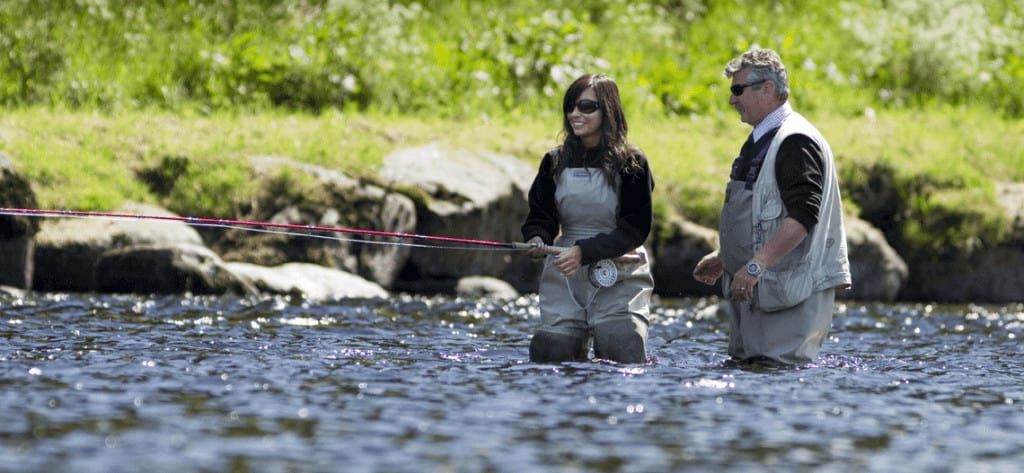
There used to be a time when fly fishing holidays boiled down to renting a self-catering cottage near a river – you’d show up, find the water, and hope for decent weather.
But that model’s been overtaken by a more deliberate approach: the specialist fly fishing holiday where every single detail from the beat you fish to the breakfast you get is geared towards the rod in your hand.
This article’s a guide on how these holidays came about, where you can find them in the UK and beyond, the species you can target, how to plan around seasons & regulations, and what to keep in mind for your first trip – whether you’re a seasoned angler or just getting started.
Key Takeaways:
- Specialist fly fishing holidays have moved on from generic cottage-near-a-river breaks – they’re now curated experiences with private beats, expert guiding, and accommodation designed from the ground up for anglers.
- Anglers can now pick & choose trips tailored to their preferences: sea trout on Welsh spate rivers, salmon fishing in the Scottish Borders, wild brown trout on English chalkstreams – or mix salmon and trout in remote Scottish glens.
- Modern fishing holidays combine comfort (lodges with hot tubs, farmhouses with character) with serious river access. Short-break packages (2-4 nights) have replaced the old week-long fixed rental.
- Planning a fly fishing trip is all about weighing up logistics, budget, and your own skill level – plus matching up the species & type of fishing you want (river fishing, stillwater, UK or abroad).
- Specialist trips now cater to all sorts of groups – including families with non-fishing members, with activities & beginner tuition to keep everyone happy.
What Makes a Holiday a “Specialist Fly Fishing Holiday” Today?
Picture this: waders drying in a warm, heated rod room, a packed lunch ready to roll by six in the morning, and a host who can point you in the direction of the pool where a two-pound wild trout was caught the day before. That’s the difference between a generic countryside break with incidental fishing and a real specialist fly fishing holiday.
“Specialist” means that everything’s designed to make your fishing experience as good as it can be – not just being near water. It means private or semi-private beats where you’re not competing with day-ticket crowds. It means a ghillie or guide who knows the local hatches, river levels & which fly to tie on when the olives start popping out. Fishing lodges take this a step further – everything from check-in to the evening meal is designed around the fishing schedule.
That’s a big contrast with a generic countryside break. You might find a “rod-and-line” mention in the property listing, but there’s no guarantee the river’s in good condition, no one to advise on conditions, and no access rights beyond a vague “the river’s down the lane”. A specialist holiday, on the other hand, has the river, tides, seasons & fish behaviour driving the whole itinerary. Common elements include drying rooms, rod racks, flexible rod days, & up-to-date info on river levels & fly choices.
The rest of this article covers destinations, accommodation types, species, seasons, and planning your first specialist fishing trip.
How Specialist Fly Fishing Holidays Have Evolved
Back in the 80s & 90s, a fishing holiday in the UK usually meant renting a house for a week, often during summer, and making do with whatever was nearby. Guide services existed, but they weren’t always easy to find unless you knew someone local. Fly fishing’s great for combining travel & sport, but the “travel” part was basically limited to wherever the cottage happened to be.
The internet changed all that. From around 2010, online booking platforms and social media helped anglers discover remote rivers far beyond their home patch. A picture of a wild brown trout from a Dorset chalkstream or a fresh-run salmon from a Highland spate river, posted on Instagram with a location tag, could fill a beat’s diary for the following season. Places like Wilde Trout built brands around chalkstream tradition & conservation, offering guided beats on waters like the Mottisfont Wilderness (which covers over 5 miles of private chalkstream).
Destination marketing really accelerated demand. “Chasing Atlantic salmon on the Spey” or “wild brown trout on Dorset chalkstreams” became phrases that sold holidays. YouTube channels showing anglers catching sea trout at midnight or dry fly fishing on the Test brought the experience to a wider audience – including a younger generation drawn to fly fishing for its experiential, nature-connected aspect.
The format shifted too. Week-long, fixed-date house rentals gave way to flexible 2-4 night breaks, long weekends, & short “escape” packages that suit modern work patterns. Post-2020, domestic UK fishing holidays got a whole lot more popular as travel restrictions & concerns about air travel pushed anglers towards rivers closer to home. Renewed interest in wild fish, off-peak grayling, & winter river fishing followed.
Choosing Your Ideal Fly Fishing Holiday: Key Decisions
Before you start browsing through listings for a fly fishing holiday, take a few minutes to answer some honest questions. The type of trip that’s right for you will depend on where you fall on a few key spectrums.
- Home vs overseas. If you’re after an easy to get to, hassle free trip then the UK is hard to beat. The familiar territory and regulations mean you can focus on the fishing rather than logistics. But if you’re looking to catch something exotic with an overseas flyfishing tour destination just be aware that this adds a whole new level of complexity with gear to sort out, permits to get and the cost of travel to boot. Luckily, some of the companies running these trips will throw in a package deal that includes accommodation and a guide to make it all worth while.
- River fishing vs stillwater. From a UK perspective rivers are all about reading the currents, matching the hatch and being prepared to adapt to the changing conditions. It’s a bit like trying to read a river’s mind – one minute its spate, the next its drought. Stillwaters on the other hand offer more predictable access and a chance to fish from a boat which can be a real treat for beginners or for those looking for a more relaxing day out. And don’t forget that a lot of stillwaters have stocked fish which can be a great option for beginners or if you’re looking for a guaranteed days fishing.
- Wild fish vs stocked fisheries. Now this is a question that’s going to get some of you thinking – do you want to go after wild and free roaming fish or do you want to be guaranteed a catch? Wild fish are always going to be harder to catch but there’s a real sense of achievement when you do land one. Plus there’s the added bonus of catch and release which helps preserve the fish for all anglers to enjoy. On the other hand stocked fisheries offer the security of knowing you’re going to catch something but they’ve often got a more limited appeal to serious anglers.
- Skill level. Be honest with yourself – are you a beginner looking for some guidance and support or are you a seasoned angler looking to push yourself to new heights. If you’re a beginner then a guided trip can be a great way to learn the ropes and get some confidence on the water. But if you’re more experienced then you might want to opt for an unguided trip and try to tackle some of the more challenging water.
- Accommodation style. Now we all know that fishing is about the fishing itself but the type of accommodation we stay in can really make or break a trip. Do you want to go for a luxury lodge experience or something a bit more rustic and adventure focussed. Some of the most popular destinations have fantastic accommodation options that range from hot tubs and good food to dog friendly policies and Wi-Fi.
UK Hotspots for a Specialist Fly Fishing Holiday
There are some fantastic fly fishing destinations in the UK that are well worth a visit. So what are they and why are they so good?.
English chalkstreams. If you’re after some of the best trout fishing in the world then look no further than the River Test in England. Its clear chalk streams are home to some of the most beautiful and magical trout fishing you’ll ever encounter. And it’s not just the Test – the Itchen, Avon and Frome are just as good and offer some of the most challenging and technical dry fly fishing in the country. If you want to fish for trout on a dry fly in classic conditions then this is the place to come – it’s a real bucket list destination.
Scottish Borders. The River Tweed is another of Scotland’s great salmon rivers and is a real magnet for anglers from all over the world. The spring and autumn runs are the times to come if you’re after salmon and sea trout and the area is steeped in guiding tradition with some of the most experienced ghillies in the business. And it’s not just the Tweed – the River Dee and tributaries like the Whiteadder and Till are all worth a visit.
Wales. If you’re after some of the best sea trout fishing in the world then Wales is the place to come. The Teifi and Towy rivers are the heartland of sea trout fishing and the conditions can be pretty wild – late nights and spate conditions are all par for the course. But it’s not all about the night fishing – the upland streams offer some of the most beautiful and scenic brown trout fishing in Europe and the local area is just full of castles, coast and countryside to explore.
Northern England. If you want to fish for salmon and trout in the UK but can’t quite afford the Scottish prices then Northern England is a great option. The Tyne, Eden and Wear rivers are all seeing a revival in recent years and offer some of the most accessible and affordable salmon and trout fishing in the country. The weather and water levels can be a bit hit and miss but overall these are great value options.
Iconic Species: Brown Trout, Sea Trout, Salmon and More
Many of the most popular fly fishing holiday destinations are centred around a single species – a bucket list fish that dictates everything from the destination to the time of year. So what are some of these iconic species and where can you find them?
Brown trout. There’s something special about catching a wild brown trout on a clear river or chalkstream and it’s a real bucket list experience for many anglers. The typical UK season runs from around April to September and Mayfly time in June is peak dry fly fishing conditions. If you want to fish for trout on a dry fly in the most perfect conditions then a trip to the UK in June is a must.
Sea trout. These are fish that are as fiery on the line as they are in the river – nocturnal, unpredictable and crazy on the line. The rivers that make them happy are in Wales, south west England and the Scottish Borders – its spate rivers that are the places they love. If you’re planning a sea trout holiday then you’ll be having late nights, flexible sleeping patterns and an evening start time that feels more like a job than a holiday. The moon phases and river levels are as important as the point of the fly you use.
Atlantic salmon. Holidays based on catching salmon are all about the river levels and beats. The best months for catching on the big rivers vary – the Tweed you can fish from 1st February to 30th November but some of the southern rivers are better in the spring and late summer. For some reason the timing of the salmon runs makes all the difference to how well you do and how much fun you have so you have to get it right. One of the downsides to fishing for salmon is that in premium places like this catch-and-release is a must so you have to make sure you’re doing it right.
Grayling. These are the ones you catch in the off-season when the trout fishing shut. Many of the rivers in Wales and England have special packages for grayling in the winter which is wet fly and nymphing at its best. Grayling are usually around from 1st October all the way through to the middle of March, depending on the river.
Mixed trips. Because conditions or rules can sometimes limit you to only one species for a day, you have to be flexible and go with what the river gives you. I mean a mixed salmon and trout trip where you do what the river tells you is a great way to go.
River Fishing vs Stillwater : a Holiday to match your style
If you’re not sure whether to go for a river trip or just head to the lake then think back to why you started fly fishing in the first place.
River fishing is about wading and casting and reading the currents and then just going for it. On rivers like the River Wye, Avon or one of the many Scottish streams the fun is in finding all the small pools and runs and sight-fishing to individual trout for yourself, it’s a bit of a thrill. The catch is never a guarantee and that is half the draw.
But then there’s stillwater and reservoir fishing. Boat fishing on big lakes like Rutland or Grafham means that you’ve got a great spot over all the fish regardless of the river levels, and the chances of catching a fish are a lot higher. Or you can just bank fish and that’s much simpler and is a great place for beginners to get a feel for casting. Some holiday places now offer the best of both worlds – stay in one place and go on different types of trips in the morning and the afternoon – it’s perfect for mixed-ability groups.
If you’re new to fly fishing then the most sensible thing to do is book a stillwater and then go on to a more technical river trip once you’ve got a bit more experience.
Accommodation Types on Modern Fishing Holidays
Accommodation options are all over the place – hotels, guest houses and campsites but the specialist fly fishing market has its own set of categories that you need to know about.
Riverside farmhouses and cottages. These are old houses that sleep whole families, with gardens and the dogs allowed and fishing just in the garden or just a short walk down the river. You can self-cater and many of these places now offer rod sharing and beat access as part of the deal. These are great for families who want space and a kitchen.
Lodges and Cabins. These are the fancy places with hot tubs and big windows to look out at the river and easy access for just a couple or a small group. Some of these places are just purpose-built for anglers – there’s for example Copper lodge on the River Taw or Kingfisher Lodge on the River Avon, and I know some of these places are pet-friendly which is a big plus. Prices for these places are up to £400 a night, depending on the place.
Shepherds’ huts and fish camps. If you’re after the real rustic experience and want to fish all day then these are the places to go. Think wood burners and starry skies and the sound of the river through the walls. These places are best for solo anglers or pairs who just want to get on the water and forget about everything else.
Small hotels and inns. Some people just like the idea of staying in a traditional inn by a famous river. There’s often a bar and great food so you can just relax after a long day.
Whatever you book, make sure it’s got all the angler-specific features that you need – rod racks, drying rooms early breakfasts and all that.
Seasonality: Planning Your Trip Around UK Fishing Seasons
The most important thing when picking a fly fishing holiday in the UK is to get the timing right. Get it wrong and you’ll find the water is closed. Specialist fly fishing holidays need to be planned around species seasons and local byelaws.Many English chalk streams open to brown trout around 1st April and stay open right up to 30th September. Then there’s the grayling season – some rivers see theirs start on 1st October and run all the way through to late February, or even mid-March. And then there’s the sea trout – they’re usually fishing from mid-April right through to late October, with prime months on the west coast being June, July and August. Of course the fishing for all these species is affected far more by the state of the water than by a calendar.
When it comes to salmon, it’s a bit of a different story, and the rules can vary from river to river. The Tweed, for instance, is open from 1st Feb through to 30th Nov. Some rivers down south fish best from March to August. Then there’s another rule to keep in mind: across most of England, close seasons for salmon and sea trout begin on 1st November, although there are some regional variations.
If you’re thinking of fishing off-season, don’t discount the shoulder months. The early spring can be great for nymphing on rain-fed rivers, while the late summer’s terrestrial fishing can be pretty good in September. And if you’re fishing for grayling in the winter, there are plenty of untouched stretches to be had on quieter rivers. Plus – and this is a big plus – you can often pick up a better deal on accommodation outside of July and August.
Licences, Permissions and Conservation Considerations
Even on a holiday package, you’re still responsible for making sure you’ve got the right licences and following the local rules. Now that’s just basic politeness, but it’s worth noting that in England, Wales and Northern Ireland, you’ll need to hold a fishing licence. In Scotland, no national rod licence exists, so you’ll need permission from the land or beat owner.
An Environment Agency rod licence will cover you for salmon, sea trout, trout and coarse fish in England and Wales. The licence also tells you how many rods you’re allowed to use – one rod is fine for migratory fish like salmon and sea trout, but you can use up to two rods on stillwaters. If you’re going on a fishing holiday, it’s usually included in the package, but it’s always a good idea to make sure in advance. And then there are the local rules – some rivers might insist on catch-and-release for wild sea trout and salmon, others will ask you to use barbless hooks. Don’t even get me started on the state of some of the watersheds – many wild fish populations are under threat.
Guided vs Unguided: How Much Help Do You Really Need?
A good local guide can make all the difference to a fly fishing holiday. They can help you avoid wasting time on the wrong water, make sure you’re safe on unfamiliar rivers, and even help you improve your casting and presentation in just one session.
Guides are worth hiring in a few specific situations:
- If you’re a complete beginner trying to catch a sea trout at night on a Welsh spate river
- If you’re fishing salmon for the first time and you’re not sure where to start on a complex system in the Scottish Borders
- If you’re visiting an unfamiliar chalkstream and you really don’t know where to start
That being said, self-guided holidays are a great option if you’re a more experienced angler but still want to make sure you get the most out of a holiday. You’ll save on guide fees, and you can still have a local briefing on access paths, hazards and current hatches.
Another option is a hybrid approach: book a single guided day at the start of a week’s holiday, get the lowdown on the beats and the patterns, and then spend the rest of the week applying what you’ve learned on your own.
Designing a Fishing Holiday for Mixed-Ability Groups and Families
If you’re planning a fishing holiday for a mixed-ability group or a family, there are a few things to keep in mind. First, choose a location with plenty of non-fishing options – that way, the non-anglers will have plenty to keep them occupied. Dorchester, Salisbury or Edinburgh are all great options, as is the New Forest or a nearby beach. And if the kids are interested in fishing too, a short casting lesson on a lawn or some simple float fishing on a stocked pond can be a great way to get them started.
When it comes to properties, look for ones with space and a garden – that way, you can all have your own bit of peace and quiet, and the kids can safely explore. And then there’s the fishing itself – build in little “windows” for fishing, rather than trying to disappear for 12 whole hours. An early morning session before breakfast, or an evening rise after dinner, fits in with shared meals and day trips pretty easily.
If some of the group aren’t interested in fishing at all, they can still come along for a wildlife-watching walk along the river. There’s plenty to see – birds, otters, kingfishers… it’s all part of the experience.
What to Pack for a Specialist Fly Fishing Break
When it comes to packing for a fishing holiday, it’s all about versatility and being prepared for the weather. UK weather can be a right lottery, so you’ll want to make sure you’ve got layers: base layers, fleece, waterproofs, the works. And don’t forget a warm hat and gloves for those chilly spring mornings or winter grayling fishing trips.
Fishing gear. Multi-piece rods really make packing a breeze, saving space for all your other trip essentials. Make sure you’ve got a few lines to choose from – floating for those dry fly situations, sink-tip for a chance at salmon, and so on. When it comes to flies, you’ll want to match what you’ve got to the water you’re fishing – mayflies and olives for that chalkstream magic, tube flies and doubles for salmon runs, and sparse patterns for those elusive sea trout. If you don’t have all your own gear, see if the lodge or your guide is able to provide hire tackle.
Accessories. You can bet your polarised sunglasses are a must-have, but a headtorch is pretty essential for any late night sea trout trips you’ve got planned. And don’t forget a first-aid kit and a waterproof phone case – safety first, especially when you’re venturing into unfamiliar territory. When it comes to nets, you want to make sure you’ve got knotless ones – they’re much better for handling those fish.
Admin. Don’t forget to bring printed or digital copies of all your bookings, rod licences, beat maps, tide tables, and any local contact numbers you need – ghillies, guides and river bailiffs are just a few examples. Double check your arrival details and make sure you know any gate codes or access instructions.
Beyond the UK: European and Worldwide Specialist Fly Fishing Holidays
The same principle applies whatever your destination. For UK anglers, near-European options are a great way to get a taste of exotic fishing without breaking the bank on long-haul flights.
Normandy’s chalkstreams, like the River Andelle at Croisy-sur-Andelle, offer up wild brown trout and release-friendly dry fly fishing just a short hop from the UK ferry ports. Slovenia’s got some amazing alpine rivers with marble trout and grayling in the Soča valley. Iceland’s got rivers & lakes full of Atlantic salmon, Arctic char and sea trout, set in landscapes that feel positively otherworldly. When you book with a package that includes flights, ATOL protection gives you peace of mind.
Further afield, New Zealand’s famous for its massive wild trout in gin-clear rivers – and sight fishing’s pretty much de rigeur in those waters. Patagonia’s a real hotspot for fishing, with rivers & lakes full of brown and rainbow trout that’ll put your skills to the test. Montana’s got some of the classic American trout fishing rivers like the Madison and Yellowstone. And if you’re after salmon, there are loads of different species to go after in Canada, like Chinook, Coho and Sockeye in British Columbia & Alaska.
If you’re feeling adventurous, there’s always saltwater options too. The Bahamas is a top destination for saltwater flats fishing for bonefish, and Hayling Island in the UK hosts its own Saltwater Fly Fishing festival every July – or you can just head there for a more regular saltwater fix. Africa’s got Tigerfish and Nile Perch, while Arapaima are some of the biggest freshwater fish in Asia for anglers willing to really go the extra mile. Remote wilderness fishing trips often mean some serious travel and roughing it, but the rewards are well worth it.
It’s the same wherever you go – match your gear and skills to the destination, and choose a package that suits your non-fishing interests too. Book with people who actually know what they’re doing when it comes to fly fishing, and make sure you’re getting the right kind of experience for you.
FAQ
These questions cover some of the nitty-gritty stuff that didn’t quite make it into the main text.
Do I really need to bring my own gear for a specialist fly fishing holiday?
Well, actually, loads of fishing lodges and guides can provide rods, reels and waders for a hire fee. Regular anglers usually like to bring their own gear because it’s just more familiar – and that can make a big difference when you’re on the water. If you’re a beginner, just check in advance what’s provided and bring a few basics like some decent clothes, shoes and polarised sunglasses. And don’t be afraid to brush up on your casting skills before you go.
Can beginners enjoy a specialist fly fishing holiday, or is it only for the experts?
Beginners are more than welcome – in fact, loads of specialist trips now offer castles lessons and simple fishing to help you get started. Starting on stillwaters or gentle trout rivers with a guide for the first day or so is a great way to build some confidence and get the basics down. A well-managed reservoir or stocked lake is a great place to start, before you move on to some of the more challenging river fishing.
How far in advance do I need to book a fly fishing holiday?
Well, the answer depends on when you’re going – but basically, you should try and book ahead as far as you possibly can. Chalkstream mayflies in May/June, and autumn salmon in September/November are peak times and can book up fast. If you’re flexible and can fish during shoulder season, you might find it easier to get a last minute deal.
Are specialist fishing holidays any good out of main summer season?
Absolutely – autumn and winter can be great. Salmon runs on some rivers continue into October & November, and grayling fishing can be real fun on a crisp winter’s day. You just need to factor in the shorter daylight, colder temperatures and maybe higher river levels when you’re choosing your destination and packing your kit.
What happens if the river is undrinkable due to floods or drought?
You’ll probably get offered alternative fishing, or a different destination. It’s not worth panicking – it’s all part of the adventure!Reputable operators will lay out their policies right up front before you book. Options are usually pretty standard – you might be able to swap to a different beat, head over to a nearby stillwater to fish, or even reschedule some part of the trip. Some may also offer a partial refund or credit. Just ask them about their contingency plans & also see if your travel insurance will cover you in case of weather-related issues. The more flexible you are, the better off you’ll be – if the river is in flood, for example, you’re probably better off spending a morning on a stocked lake and then exploring the local area in the afternoon than just sitting on the bank staring at brown water.