
A dining room is not only an area for meals but also one of the spaces in the home with the most emotional warmth. It carries the daily rhythm of life and records the communication and companionship among family members. From a cup of coffee in the morning to a family gathering in the evening, all these moments form a unique sense of life rituals in the dining room. Therefore, a good dining room design should not only be aesthetically pleasing but also equipped with comfort, functionality, and atmosphere, making every meal more worth looking forward to.
Upgrade your landscaping with a high grade artificial grass carpet roll from LitaGrass, designed to deliver a lush, green appearance year round without the need for mowing or watering.
Modern dining room design is gradually shifting from the traditional ‘eating space’ to the creation of ‘life scenarios’. Light, materials, colors, furniture, and traffic flow layout work together to make the dining room both independent and naturally integrated into the entire home system. Whether it’s the simple and orderly modern style, the warm and natural wooden style, or the refined and romantic light luxury and French styles, each design has its unique charm. Choosing a style that suits oneself can turn dining into a pleasure and make the space closer to life itself.
01 Modern Industrial-Style Restaurant
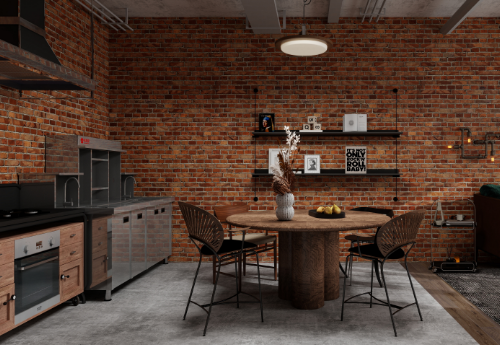
Exposed red brick walls, metal furniture, metal lighting fixtures, and rough textures give the restaurant an industrial raw texture. This makes the restaurant feel authentic, distinctive, and full of character.
02 Arch-Shaped Wall Design
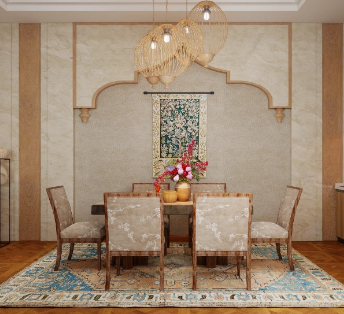
In the restaurant, the unique arched wall design complements the ethnic-themed paintings and decorations, paired with patterned carpets and distinctive woven pendant lights to create a warm and comfortable dining space.
03 French Elegant Restaurant
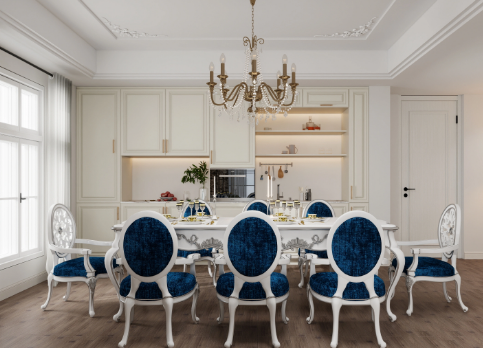
Create a romantic atmosphere using cornice moldings, cream-colored walls, and classic pendant lights, paired with slender-legged fabric chairs in a white and blue color scheme. This makes the dining area both soft and refined, ideal for those who appreciate an elegant lifestyle.
04 Integrated Design of Sideboard
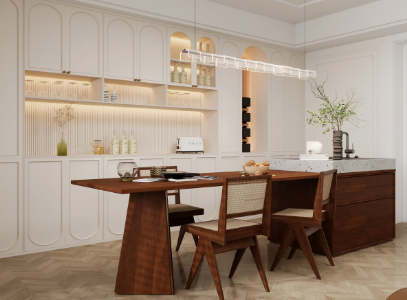
Integrate storage, display, and meal preparation functions into the sideboard. It can be used to place wine, utensils, and coffee machines, making the dining area more livable and tidy.
05 Log Flavor
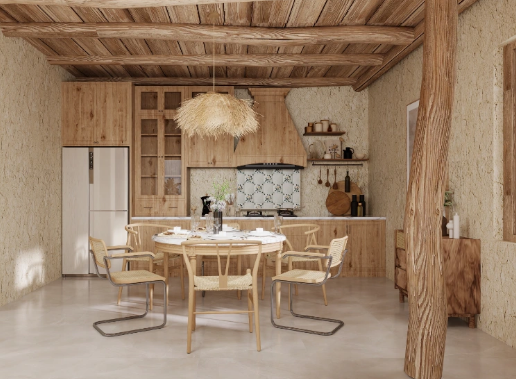
In the restaurant, the original wooden cabinets echo with the rough walls. The wooden beams and pillars, paired with woven pendant lights, add a touch of rustic charm to the dining area.
06 Spacious Sunlit Restaurant
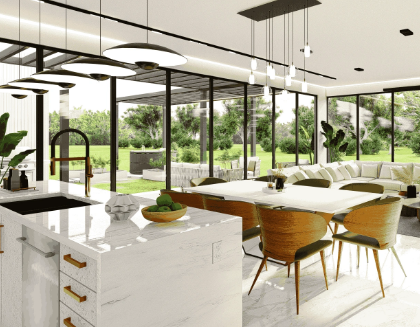
Let natural light be the restaurant’s best ‘decoration’. The bright layout with large glass windows makes the restaurant more open, comfortable, and closer to nature.
07 Decorate with Green Plants
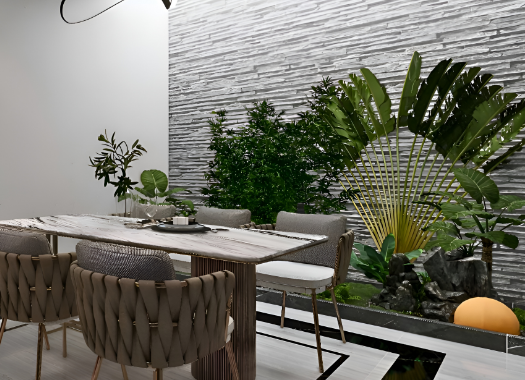
By decorating with green plants, the restaurant becomes more natural, reduces a sense of oppression, and creates a more pleasant dining environment that is closer to nature.
08 Marble Dining Table Design
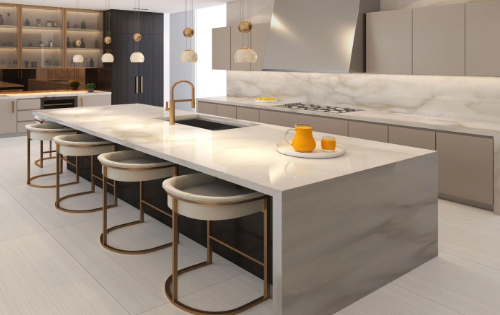
With the uniquely textured marble tabletop as the visual focal point, the space appears extremely minimalist, instantly elevating the restaurant’s quality.
09 Advanced Ambient Lighting Design
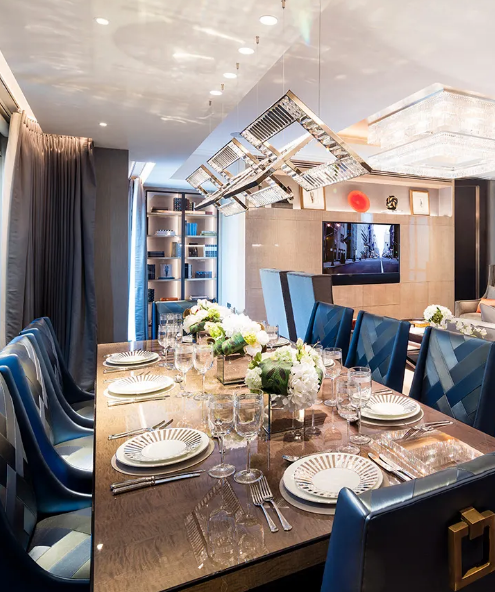
Using a multi-layered lighting system combining pendant lights and recessed ceiling lights, it becomes a visual focal point, creating a warm and cozy atmosphere for the dining area, presenting a refined and upscale quality to the space.
10 Semi-Open Kitchen-Dining Combination
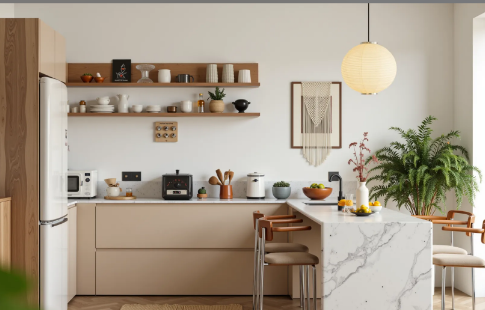
Using the island as a transition, the kitchen and dining area are connected, making the space more visually open and enhancing interactivity
CONCLUSION
An excellent dining design, at its core, is about balancing aesthetics with user experience: comfortable seating encourages lingering, appropriate lighting enhances the dining atmosphere, practical sideboards enrich storage functionality, and suitable color coordination and material selection further determine the overall character of the restaurant. Regardless of space size, as long as light, layout, and style unity are well handled, one can create their ideal restaurant.
A restaurant doesn’t need complex decorations, but it must have warmth; it doesn’t require expensive furniture, but it must align with lifestyle. As long as the design centers around ‘comfort,’ ‘naturalness,’ and ‘encouraging family to sit down and communicate,’ every home can have a warm restaurant where people are willing to stay and share. It is not just a place for food, but also a convergence point for life and emotions.
Dining Room Ideas FAQ
1 What are the advantages of combining an open kitchen with a dining area?
It can enlarge the visual space, enhance interactivity, and create a more life-like atmosphere. It is very suitable for people who often entertain guests or enjoy cooking. However, if you are concerned about oil fumes, you can install glass partitions, silent range hoods, or adopt a semi-open design.
2 How should restaurant lighting be done to look good and be practical?
The most important aspect of a restaurant is the ‘main light above the dining table’. It is recommended to use a warm color temperature (2700K–3000K) to create a cozy atmosphere. You can complement this with hidden light strips, wall lights, or track lights to enhance lighting layers and add depth. If the dining table position is changeable, choose adjustable-height or movable lighting fixtures.