
Introduction
A guest bedroom serves a simple yet profound purpose: to make visitors feel welcome, comfortable, and right at home. Whether you host family for holidays or friends for weekend getaways, a well-designed guest bedroom transforms a spare room into a sanctuary that speaks volumes about your hospitality . The key to creating such a space lies not in elaborate decorations but in thoughtful design choices that anticipate guests’ needs while reflecting your personal style.
Ideas for Designing a Guest Bedroom
1. Achieve Design Consistency Throughout Your Home
The guest bedroom should flow seamlessly with your home’s overall design aesthetic. It shouldn’t feel like an afterthought but rather an intentional extension of your interior’s personality . This doesn’t mean every room must match perfectly, but there should be a sense of harmony that makes the transition from one space to another feel natural.
Consider using similar color palettes, textures, or accent pieces that you’ve incorporated elsewhere in your living areas. For instance, if your living room embraces a coastal theme with sandy neutrals and navy accents, bring a lighter variation—perhaps a desaturated blue or seafoam green—into the guest room . This creates visual continuity while allowing the guest room to maintain its own identity.
2. Choose the Right Color Scheme
Color sets the emotional tone of any room, and the guest bedroom is no exception. Soft neutrals and cool blues promote relaxation, while muted greens add a refreshing touch of nature . The goal is to create a palette that makes guests feel calm rather than overwhelmed.
When selecting colors, it’s crucial to test them in the actual room. Paint swatches on all four walls and observe how they appear at different times of day, as natural light can dramatically alter the way colors look . If you’re not satisfied with how a color appears in the room’s lighting, consider adjusting the brightness or experimenting with different finishes like matte, eggshell, or semi-gloss.
3. Create Seasonal Flexibility
A guest bedroom should adapt with the changing seasons, but this doesn’t require complete redesigns. Simple swaps can transform the space: linen sheets and airy drapery in summer, heavier throws and richer hues in winter . Update accent cushions, artwork, or a decorative blanket rather than overhauling the entire room.
Subtle seasonal touches, such as a sprig of eucalyptus in a vase during the holidays or a bowl of fresh fruit in summer, make the space feel alive without being overdone . This approach ensures your guest room remains inviting year-round while keeping your decorating efforts manageable.
4. Borrow from Hotel Design Principles
Hotels excel at balancing comfort with sophistication, and their design principles translate perfectly to home guest rooms. Incorporate elements like crisp bedding, minimalist nightstands, layered lighting, and blackout curtains . These features create a “mini retreat” that makes guests feel pampered rather than merely accommodated.
Add thoughtful extras that hotels often provide: a luggage rack, slippers by the bed, and easily accessible electrical outlets for charging devices . Small touches like a tray with water and glasses on the dresser, a notepad, and a clearly displayed Wi-Fi password go a long way in making guests feel welcome.
5. Provide Flexible Comfort Options
Every guest arrives with different preferences and routines. Some prefer firm pillows, others soft ones; some rise early, others stay up late . Build flexibility into your guest room by offering a variety of pillow types—including firm and soft options in different heights. For an extra touch of luxury, include European feather pillows that are both comfortable and decorative when combined with standard pillows.
6. Add a Statement Accent Wall
A bold feature wall can instantly elevate a simple room. Consider options like painted or wallpapered walls in colors that contrast with your main palette to add dimension and interest . Geometric shapes, stripes, or large wall murals can inject personality, while textured paint creates visual movement.
For a more natural look, consider material textures such as wood paneling, exposed brick, or stone, which evoke warmth and earthiness . Oversized artwork can also serve as a focal point. The key is balance—let the accent wall shine while keeping other elements calm.
7. Layer Textures for Depth
Texture adds sophistication to a room, bringing both visual depth and tactile richness. Layer different materials strategically: crisp cotton sheets with a chunky knit throw, velvet cushions with linen drapes, or a plush rug with a sleek wooden side table .
For a cohesive look, stick to two or three main textiles and repeat them throughout the room in rugs, bedding, and ornamentation . If you’re unsure where to start, opt for a neutral palette and let the materials’ natural textures create interest. This approach works particularly well in guest rooms, where you want visual appeal without overwhelming your guests.
8. Incorporate Luxurious Details
Luxury in a guest room doesn’t necessarily mean expensive. A scented candle, high-thread-count sheets, or a handcrafted water carafe on the nightstand all create an indulgent feel . Lamps and light shades offer an accessible way to add elevated ambiance. Mirrored, metallic, or crystal accents bring sophistication, while a tassel holdback for drapes adds a touch of elegance.
Personal touches like fresh flowers, a handwritten welcome note, or a curated stack of books show thoughtfulness . These small efforts signal that your guests are valued, not just accommodated.
Case Study
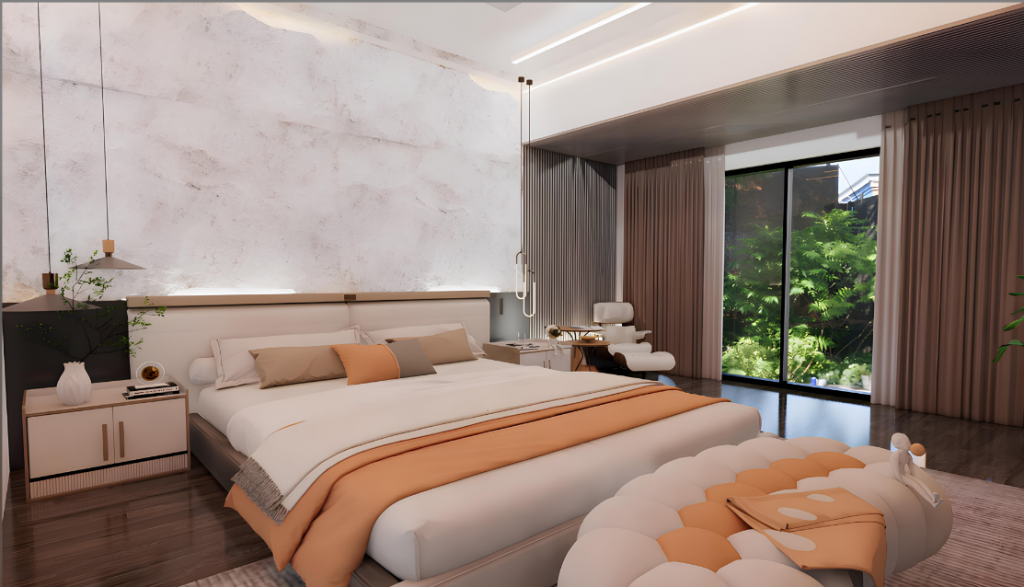
Featured Highlights of This Premium Guest Room
This guest room redefines upscale accommodation with its seamless fusion of modern luxury, minimalist sophistication, and immersive comfort, crafted to deliver a tranquil, premium retreat for every guest.
1. Refined Modern Luxury Aesthetic
The room features a timeless contemporary design anchored by a statement textured stone-look accent wall, complemented by warm wood tones and a curated neutral palette elevated by soft terracotta accents. Meticulous details, from custom-fitted nightstands with sleek hardware to sculptural suspended pendant lights, exude understated opulence, balancing high-end craftsmanship with a warm, uncluttered feel that avoids excessive ornamentation.
2. Exceptional Sleep Experience
At the core of the space is a generously sized premium bed, dressed in ultra-soft, high-quality linen bedding, layered with plush supportive cushions and a cozy weighted throw. The ergonomic padded headboard and carefully calibrated soft furnishings create a dedicated, distraction-free sleep zone, engineered to deliver a restorative, uninterrupted night’s rest for guests.
3. Spacious, Functional Zoned Layout
The room boasts an open, airy floor plan with intuitive functional zoning, catering to both rest and leisure needs. Beyond the core sleeping area, a dedicated relaxation nook beside the floor-to-ceiling windows is fitted with a premium ergonomic lounge chair and side table, perfect for reading, casual work, or quiet unwinding. The playful cloud-shaped ottoman at the foot of the bed adds a stylish design touch while providing extra flexible seating, enhancing the room’s versatility.
4. Immersive Atmospheric Lighting & Superior Natural Light
A signature feature is the advanced layered lighting system, which replaces harsh overhead main lights with recessed linear ceiling lights, hidden ambient backlighting behind the headboard, and decorative accent pendants. This fully customizable lighting scheme creates a soft, dimmable glow, adapting seamlessly from bright, energizing daytime illumination to a calm, intimate mood for evening relaxation. Expansive floor-to-ceiling glass windows flood the space with abundant natural light throughout the day, while high-grade blackout and sheer curtains ensure full privacy and light control for guests.
5. Seamless Nature Integration
The panoramic windows frame lush, unobstructed views of vibrant green outdoor landscaping, seamlessly bringing the serenity of nature into the interior design. This connection to the natural world, paired with the room’s warm organic materials (including rich solid wood flooring and textured natural surfaces), cultivates a soothing, healing atmosphere, allowing guests to fully unwind and escape the hustle of daily life.
Conclusion
Learning how to design a guest bedroom is all about balancing style, functionality, and hospitality. The best guest bedroom ideas aren’t about creating a perfect, magazine-worthy space — they’re about creating a room that makes your guests feel seen, valued, and right at home. Whether you’re working with a small spare guest bedroom on a tight budget, or designing a luxury retreat for frequent visitors, the right choices turn an overlooked spare room into one of the most beloved spaces in your house. With the tips, ideas, and must-haves in this guide, you have everything you need to create a guest bedroom that both you and your visitors will love for years to come.
Looking for more interior design inspiration? Explore our guides on EClife’s home decor, colour psychology in modern spaces, and budget-friendly renovation tips to continue transforming your home.