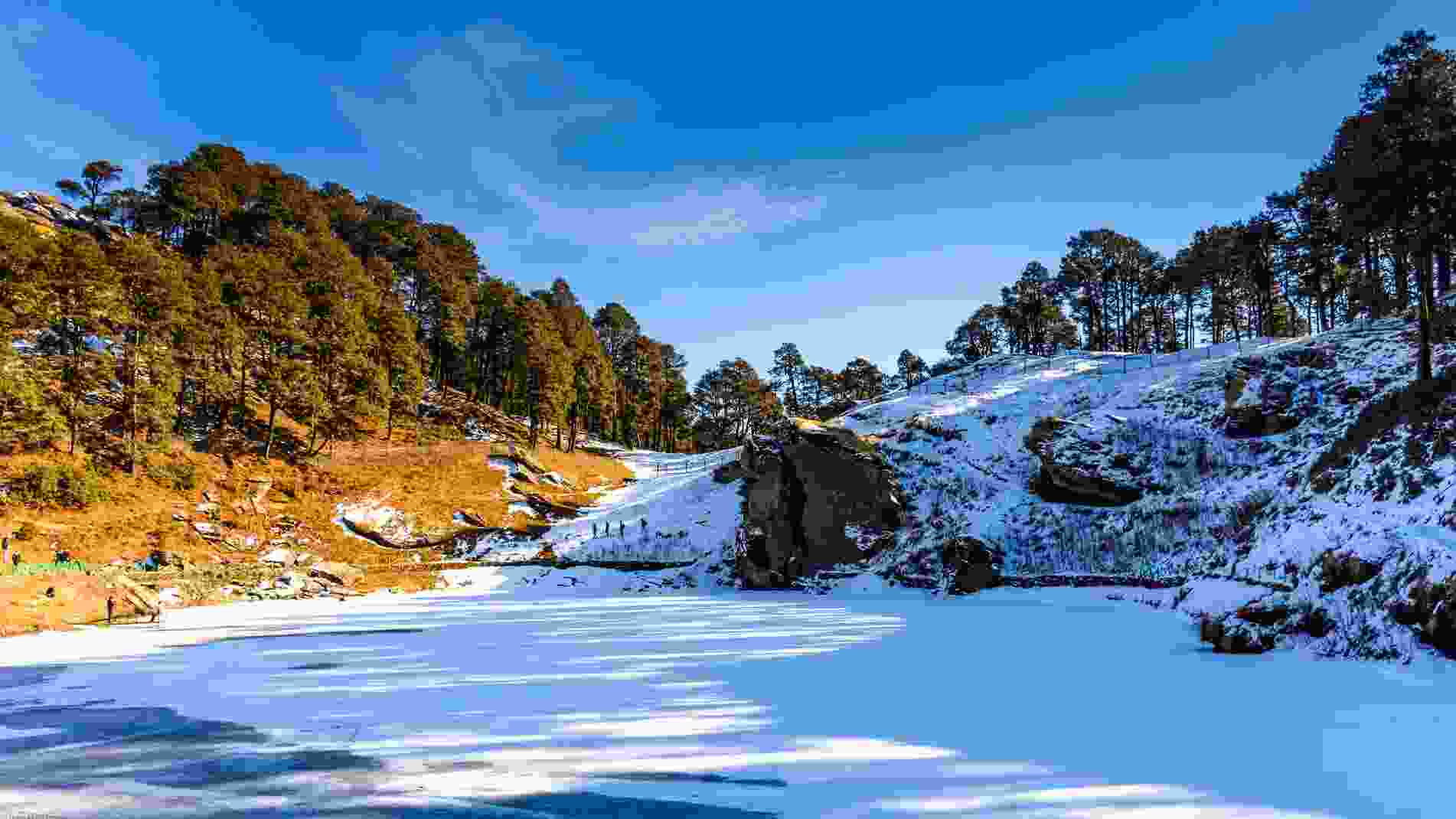
Most people miss the magic of Jibhi because they’re too busy chasing Manali’s crowds. Jibhi usually receives snowfall between late December and February, and right now in mid-December, you’re hitting the sweet spot. The pine forests are starting to wear their white coats, homestay chimneys are pumping out wood smoke, and the Tirthan River still flows clear before the deep freeze sets in.
But here’s what nobody tells you about planning this trip from Ahmedabad — the route isn’t easy, Jalori Pass becomes a gamble in winter, and if you don’t plan your stay zones correctly, you’ll waste precious mountain time figuring out logistics. This is exactly where well-planned Tirthan Valley and Jibhi Shangarh packages make a huge difference, helping you cover the right spots without stress.
Why is December special?
I’ve seen the valley transform dozens of times across seasons. December sits right at that tipping point where you get the best of both worlds.
Jalori Pass might close temporarily during heavy snowfall, which changes your entire route strategy.
The pass typically closes around mid-December, and this year, early reports suggest snow accumulation started in late November at higher altitudes.
The morning frost at Jibhi Waterfall creates these glass-like icicles hanging from moss-covered rocks. By 11 AM, when sunlight filters through the dense deodar canopy, everything sparkles.
But you need to start early—after noon, the trail gets muddy as the ice melts.
Current Snow Conditions (December 2025)
As of mid-December:
- Jibhi village: Light to no snow, temperatures dropping to 2-5°C at night
- Shoja: Intermittent snowfall, mornings often foggy until 9 AM
- Jalori Pass: Heavy snow likely, road may be closed or restricted to 4×4 vehicles
- Tirthan Valley: Clear roads, cold nights around 0-3°C
The road between Banjar and Jibhi gets icy patches after 4 PM when shadows fall across the valley. Local drivers switch to a slower gear on the 12 km stretch because visibility drops fast.
Getting There from Ahmedabad: The Reality Check
The distance is approximately 819 miles and takes around 17.5 hours by road. Nobody drives this in one go unless you’re crazy about mountain highways.
Option 1: Fly to Chandigarh (Most Practical)
Direct flights operate from Ahmedabad to Chandigarh, taking approximately 1 hour 35 minutes, with fares starting from ₹4,700-5,000.
Why I recommend this:
Early morning flights land you in Chandigarh by 8 AM. You grab breakfast near the airport (the dhabas on the Chandigarh-Shimla highway serve killer parathas), and you’re driving toward Jibhi by 9:30 AM.
The Chandigarh to Jibhi drive covers roughly 280 km and takes 8-10 hours. But here’s the catch—you need to choose your route carefully in December.
Route A: Via Mandi–Aut–Banjar (Recommended for December)
Chandigarh → Bilaspur → Sundernagar → Mandi → Aut → Banjar → Jibhi
This is the safer winter route. In winter, you can reach Jibhi only via Mandi as the Shimla and Jalori Pass route remains closed.
The tunnel at Aut saves you 45 minutes. After Mandi, the landscape changes—you enter the Beas River valley, and apple orchards line the roads even in winter, though the trees are bare skeletons now.
Stop at the viewpoint just before Banjar. On clear days, you’ll see the Pir Panjal range stacked in layers of blue and white. Locals call this spot “the photographer’s curve” because every taxi driver knows to slow down here.
Route B: Via Shimla–Narkanda–Jalori Pass (Risky in December)
Jalori Pass usually opens around mid-March and closes in mid-December depending on snow accumulation.
I don’t recommend gambling on this route in late December unless you confirm road status the morning of your journey. Even if locals say “thoda snow hai” (little snow), that little snow becomes a 4-hour stuck-in-traffic nightmare by afternoon.
Option 2: Train to Chandigarh + Road
Take an overnight train from Ahmedabad to Chandigarh (about 18-20 hours). You save on a night’s accommodation, and trains on this route are usually punctual.
The Shatabdi or Rajdhani options work well. You land in Chandigarh early morning, then hire a taxi or join a shared cab service.
Option 3: Fly to Bhuntar (Kullu)
Bhuntar Airport is approximately 60 km from Jibhi, but flights from Ahmedabad require connections (usually via Delhi), making it more expensive and time-consuming.
The Smart Itinerary: Where to Stay and Why It Matters
Most first-timers make this mistake—they book accommodation in just one place and waste half their days on unnecessary drives.
Here’s how to split your stay zones:
Days 1-2: Base in Jibhi
Why Jibhi First:
You land tired from travel. Jibhi has better road connectivity, more homestay options, and you can ease into mountain mode without immediately dealing with harsh cold.
The village sits at around 2,200 meters, so altitude isn’t shocking. You’ll feel slightly breathless on steep walks, but nothing serious.
Where to Stay:
I always recommend wooden homestays over fancy resorts. The family-run places near the main village offer:
- Bukhari (traditional wood heater) in rooms—essential in December
- Home-cooked meals (Siddu with ghee, Rajma, local greens)
- Real local insights (they’ll tell you if Jalori Pass opened that morning)
Budget: ₹1,200-2,500 per night for double rooms with meals
The homestay near the Old Bridge has the best morning view—you wake up to the sound of the stream and temple bells from Shringi Rishi Temple across the valley.
Days 3-4: Move to Shoja or Tirthan
Shoja sits higher (2,500 meters) and gets more snow. It’s about 7 km from Jibhi, with the newly constructed road to Jalori Pass making access easier.
If you stay in Shoja, you’re positioned perfectly for:
- Early morning attempts at Jalori Pass (if open)
- Sunrise views where the first light hits the snow line on Dhauladhar
- Quieter, more remote vibes
Tirthan Valley (villages like Gushaini, Nagini) offers:
- Riverside stays where you hear water all night
- Access to Great Himalayan National Park
- Slightly warmer temperatures than Shoja
I’d personally pick Shoja in December for the snow experience, but Tirthan if you’re traveling with older parents or kids who can’t handle extreme cold.
What to Actually Do (Beyond the Touristy Lists)
The Jibhi Waterfall Walk
Everyone goes here. But here’s the secret—go between 7:30-8:30 AM in December.
The trail from the main road takes 15 minutes through the deodar forest. By mid-morning, groups arrive, and the magic disappears. Early morning, fog hangs low, and you’ll have the frozen waterfall to yourself.
The Jibhi Waterfall turns into a frozen spectacle during winter. The cascade doesn’t fully freeze, but ice formations build up on the sides like natural sculptures.
Mini Thailand
This natural pool with turquoise water sits hidden 500 meters off the road past the Waterfall turn.
Locals recommend visiting before 10 AM because fog covers the pool later in winter. The water source comes from underground springs, so it stays clear even when the streams freeze.
Nobody swims in December (it’s freezing!), but the rock formations and pine reflection make it worth the short trek.
Jalori Pass: The Reality
The pass is closed from December to March due to heavy snowfall, often receiving 5-10 feet of snow.
If you’re traveling in early December (1st-10th), you might get lucky. Call your homestay host the night before and ask: “Jalori khula hai?” (Is Jalori open?).
Even if closed to vehicles, some local guides offer snow treks up to the viewpoint. You’ll need proper trekking shoes, the kind with ankle support and grip. Those sneakers from Ahmedabad won’t cut it.
The 360-degree viewpoint before the pass top offers similar views without the full climb.
Serolsar Lake Trek
This peaceful lake is a 5 km trek from Jalori Pass.
In December, this trek becomes moderate to difficult due to snow. The feasibility depends on snow thickness—sometimes, only the 360-degree viewpoint at Jalori is accessible.
If you attempt it, start by 8 AM. The snow on trails becomes slippery post-noon as surface ice melts and refreezes.
Chehni Kothi
This ancient tower-fort sits in Chehni Village, about 5 km from Jibhi.
The structure stands 45 meters tall, built entirely from stone and wood without any cement or modern materials. It’s over 1,500 years old and still standing through countless Himalayan winters.
The walk to Chehni Village takes you through apple orchards and past local homes where you’ll see women spinning wool on traditional charkhas. December means most farming has stopped, so villages are quieter, and people have more time to chat.
Raghupur Fort Trek
This is about a 1-hour ridge walk where wind whistles through oak trees.
In December, snow near the final 200 meters makes it slightly tricky if you start after noon. The fort ruins aren’t grand, but the ridge walk with panoramic valley views is the real prize.
Pack some peanut chikki or dry fruits. You’ll want to sit at the top and just absorb the silence.
Food: What You’re Really Here For
Forget the hotel restaurants. The best meals happen in local homes and small dhabas.
Siddu
This steamed bread with savory filling is a traditional Himachali specialty.
The version served at the small dhaba near Jibhi’s old bridge comes with walnut chutney and pure ghee. They prepare fresh batches around 5 PM when locals return from work.
Order two—one for now, one for the walk back. They taste better when you’re standing by a bonfire outside.
Trout
The Tirthan River is famous for trout. Most riverside homestays serve fresh trout grilled with local spices.
The fish is caught fresh in the morning, marinated with Himalayan herbs and lemon, then grilled over wood fire. You’ll taste the difference between this and anything served in city restaurants.
Evening Chai with Namkeen
Between 4-5 PM, everyone gathers around bukharis with chai and local namkeen (roasted peanuts, chana).
This is when homestay hosts share stories about the year it snowed so much they were cut off for 10 days, about the leopard that wandered into the village, about the old foot trails before the road came.
Practical Stuff Nobody Tells You
Cash is King
ATMs in Jibhi and Banjar often run out of cash, especially during the holiday season. Carrying cash is advisable as ATMs are limited and may not always be functional.
Withdraw enough in Chandigarh or Mandi. Keep small notes (₹50, ₹100) for chai stops, temple offerings, and local purchases.
Network Connectivity
BSNL and Airtel work decently. Jio is patchy. Mobile network on the way to Jalori is pretty stable, with BSNL, Airtel, and Idea having decent range.
Download offline maps before leaving Chandigarh. Google Maps works, but drains battery fast in cold weather.
What to Pack (Useful List)
Clothing:
- 3-4 layers: thermals, fleece, waterproof jacket
- 2 pairs of warm socks (wool, not cotton)
- Gloves (you’ll need them for morning walks)
- Woolen cap
- Comfortable trekking shoes with grip
Essentials:
- Sunscreen (mountain sun is harsh even in winter)
- Lip balm (lips crack fast in cold, dry air)
- Power bank (cold kills phone batteries)
- Torch (power cuts happen)
- Basic medicines (altitude sickness pills, Digene, Crocin)
Pro Tips from Experience:
- Pack one extra set of inner clothes. If you trek and sweat, you’ll need dry layers
- Carry a small backpack for day trips instead of taking your main bag
- Keep a reusable water bottle. Single-use plastic is discouraged, and rightly so
Transportation Within the Valley
Shared taxis run between Banjar-Jibhi-Shoja but are infrequent (1-2 per hour during daytime).
Most travelers either:
- Book a taxi for the entire trip (₹12,000-15,000 for 4-5 days from Chandigarh)
- Self-drive (if you’re confident with mountain roads)
December roads need careful driving. The stretch between Jibhi and Shoja has steep drops without guardrails in some sections. Local drivers know where ice forms. If you’re self-driving, go slow and follow local vehicle behavior.
Budget Breakdown for 5 Days
For 2 people:
- Flights (Ahmedabad-Chandigarh return): ₹10,000-12,000
- Taxi (Chandigarh-Jibhi-Chandigarh): ₹13,000-15,000
- Accommodation (4 nights, homestays): ₹8,000-10,000 (includes meals)
- Local transport, snacks, extras: ₹4,000-5,000
Total: ₹35,000-42,000 per couple
Budget travelers can cut costs by taking buses (Chandigarh to Aut, then local bus to Jibhi) and choosing basic homestays (₹800-1,000 per night without meals).
Sample 5-Day Itinerary
Day 1:
- Fly Ahmedabad → Chandigarh (morning flight)
- Drive to Jibhi (8-10 hours)
- Reach by evening, check into the homestay
- Short village walk, early dinner, sleep
Day 2:
- Morning: Jibhi Waterfall + Mini Thailand
- Afternoon: Chehni Kothi Trek
- Evening: Village walk, bonfire at homestay
Day 3:
- Check road status for Jalori Pass
- If open: Drive to Jalori, attempt a 360° viewpoint or Serolsar Lake trek
- If closed: Explore the Raghupur Fort trek or drive to nearby villages
- Evening: Move to Shoja or Tirthan
Day 4:
- Explore Shoja village or Tirthan riverside
- Great Himalayan National Park entry area (if in Tirthan)
- Bahu Lake trek (easy, scenic)
- Relaxed day, photography
Day 5:
- Morning: Sunrise views, pack up
- Drive back to Chandigarh (start by 8 AM to reach by 5-6 PM)
- Evening flight to Ahmedabad
Final Thoughts
Accept that December means you’re working around the weather, not with it. You might not access Jalori Pass. You might wake up to heavy fog and miss a sunrise. Your taxi might get delayed because the driver stopped to fix the chains for snow.
But you’ll also experience something most Manali tourists never get — a valley where tourism hasn’t killed local culture, where homestay hosts remember your name, where kids still play cricket in apple orchards, and where silence isn’t just the absence of noise but an actual presence you can feel.
The snow-dusted pines, the wood smoke curling from stone chimneys, the taste of Siddu fresh off the steamer, the sound of the Tirthan River flowing under ice sheets — these stay with you long after the trip ends. And this is exactly why many travellers now prefer thoughtfully curated Tirthan Valley and Jibhi Shangarh packages instead of rushing through crowded destinations.
Pack warm, plan flexible, expect detours, and Jibhi will give you back something cities take away — the ability to just be, without needing to constantly do.
And when someone in Ahmedabad asks, “Manali gaye the?”, you’ll smile and say, “Nahi, kuch alag kiya.”
That’s the real victory.