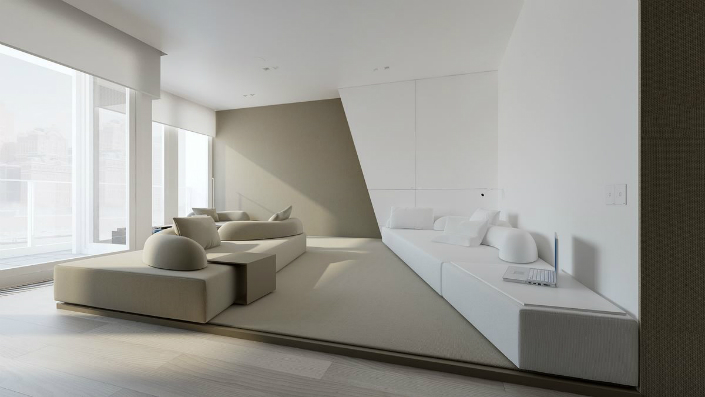
Minimalism continues influencing interior design, encouraging spaces defined by essential elements rather than accumulated possessions. Lighting plays crucial roles in minimalist interiors, both illuminating spaces and serving as carefully chosen design elements. Understanding minimalist lighting principles helps create serene, intentional environments.
Minimalism’s Core Principles
Minimalist design philosophy rests on several foundational ideas:
Intentional Restraint: Every element in minimalist spaces earns its presence through function or meaning. Nothing exists purely from habit or accumulation.
Quality Over Quantity: Fewer items means each item can be better. Minimalism enables investment in exceptional pieces rather than numerous mediocre ones.
Visual Calm: Reducing visual complexity creates peaceful environments that support focus and relaxation. Cluttered spaces generate subtle stress; minimal spaces encourage ease.
Essential Function: Minimalism doesn’t mean deprivation. Essential functions remain fully supported through thoughtfully selected solutions.
Lighting in Minimalist Spaces
Minimalist interiors require lighting that supports these principles:
Clean Forms: Fixtures feature simple geometric shapes—spheres, cylinders, planes—without applied decoration. Forms emerge from functional requirements and manufacturing processes rather than stylistic additions.
Hidden Sources: Concealed lighting—cove lighting, recessed fixtures, integrated architectural illumination—provides light without visible fixtures cluttering visual fields.
Technological Integration: Modern LED lighting enables forms impossible with traditional light sources. Ultra-thin profiles, flexible configurations, and integral drivers allow fixtures that seem to defy physics.
Material Honesty: Metal, glass, and quality plastics appear as themselves. Finishes celebrate rather than disguise material properties.
Architectural Integration
Minimalist lighting often integrates with architecture itself:
Recessed Downlights: Clean ceilings with flush-mounted lights provide illumination without protruding fixtures. Proper spacing and appropriate trims prevent the “starry ceiling” effect of poorly planned installations.
Cove and Valance Lighting: Hidden light sources behind architectural elements wash walls and ceilings with gentle illumination. These indirect sources provide ambient light without visible fixtures.
Linear Systems: Continuous lines of light—suspended, surface-mounted, or recessed—create geometric statements while providing functional illumination. These systems suit modern architecture emphasizing horizontal planes.
Slot Lighting: Narrow apertures in ceilings or walls emit light without visible fixtures. This approach achieves maximum minimalism—light without apparent source.
Statement Fixtures in Minimal Spaces
While minimalist spaces reduce quantity, carefully chosen statement fixtures can anchor rooms effectively:
Single Focal Points: One exceptional pendant or chandelier commands attention without competition from lesser fixtures. This singular focus creates powerful visual impact.
Sculptural Simplicity: Statement minimalist fixtures are sculptures that happen to illuminate. Their forms contribute aesthetic value beyond their lighting function.
Scale and Proportion: Minimalist fixtures often feature generous proportions. Large simple forms read more powerfully than small decorated ones, making bold sizing appropriate.
Color Temperature and Minimalism
Light color profoundly impacts minimalist spaces:
Consistent Temperature: Maintain consistent color temperature throughout spaces. Mixed temperatures create visual discord contradicting minimalist serenity.
Warmer Tendencies: Although minimalism might seem to favor cool light, warmer temperatures (2700-3000K) prevent sterile, clinical feelings. Warmth adds necessary humanity to spare environments.
Tunable Systems: Smart lighting allowing temperature adjustment throughout the day serves both minimalist aesthetics and human wellbeing. Program warmer evening tones and cooler daytime illumination.
Dimming as Design Tool
Control capabilities are essential in minimalist lighting:
Full Range Dimming: All fixtures should dim across complete ranges. Minimalist spaces change mood through light intensity since decoration doesn’t provide variation.
Scene Programming: Create and recall lighting scenes matching activities—working, relaxing, entertaining. One-touch control maintains minimal interaction with systems.
Intuitive Interfaces: Controls themselves should be minimal—simple keypads, hidden switches, or smartphone apps rather than complex panels with numerous buttons.
The Challenges of Minimal Lighting
Minimalist approaches present specific challenges:
Sufficient Illumination: Removing fixtures risks inadequate light. Careful calculation ensures remaining sources provide necessary illumination.
Avoiding Monotony: Purely ambient lighting creates flat, uninteresting spaces. Even minimal schemes need accent and task elements for visual hierarchy.
Concealment Requirements: Hidden light sources require architectural coordination. Retrofitting concealed lighting into existing construction involves significant work.
Quality Imperative: With few fixtures, each must be excellent. Visible quality issues are magnified when scrutiny isn’t distributed across numerous pieces.
Achieving Minimalist Lighting
Practical steps toward minimalist lighting:
Audit Existing Fixtures: Evaluate each fixture’s contribution. Remove anything non-essential or inconsistent with minimalist goals.
Invest in Key Pieces: Redirect resources from numerous mediocre fixtures to fewer exceptional ones. Quality shows more prominently in minimal contexts.
Consider Architecture: Explore concealed lighting options. Cove, slot, and indirect approaches may achieve illumination goals more minimally than visible fixtures.
Plan Controls: Ensure dimming and scene capability for remaining fixtures. Control provides variation that decoration provides in conventional spaces.
Minimalist lighting supports serene, intentional living by reducing visual noise while maintaining functional excellence. The approach proves that less truly can be more when that less is thoughtfully selected and expertly implemented.