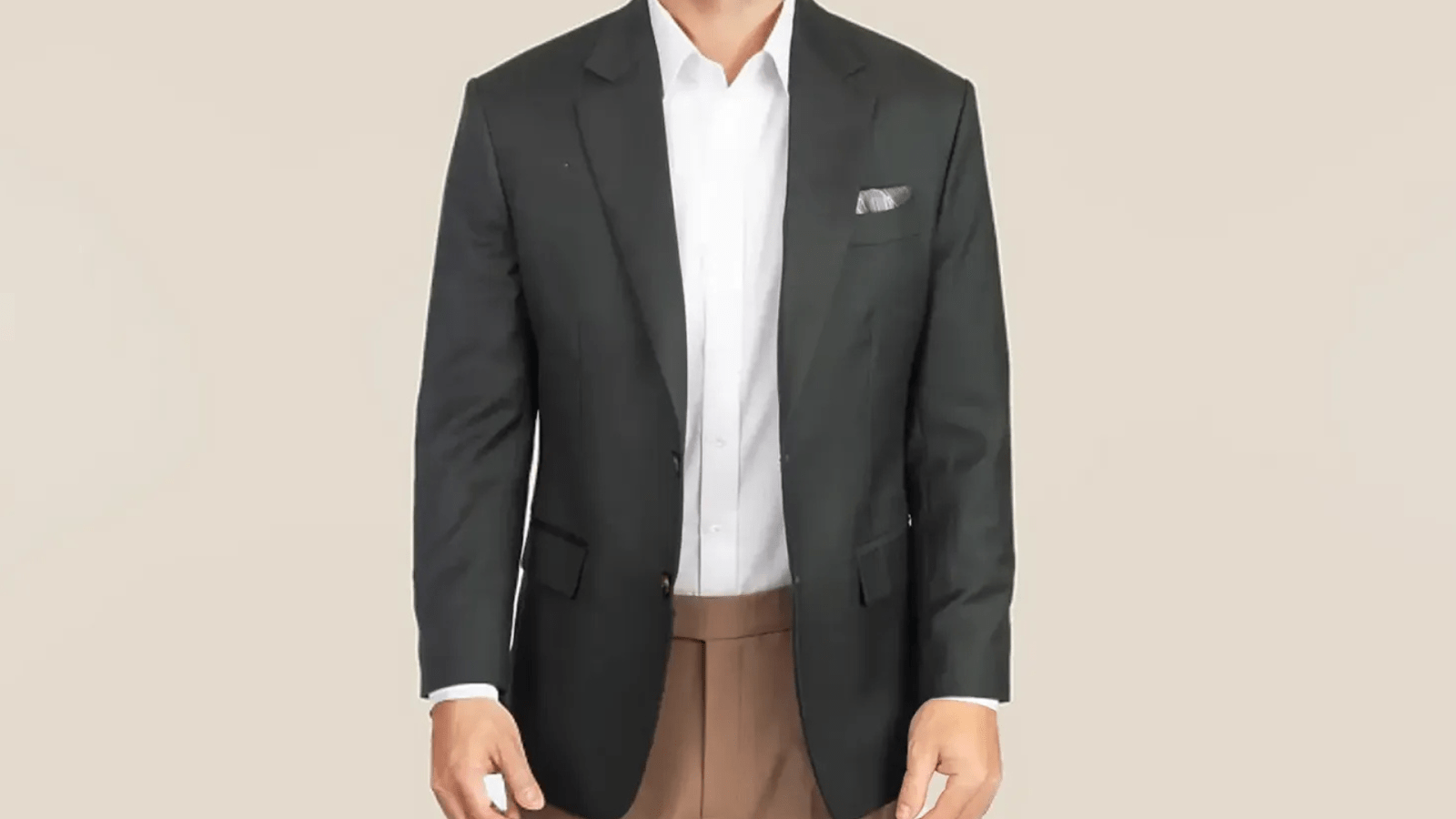
The blazer—one of men’s fashion’s oldest and most revered garments—is taking on entirely new meaning by 2026. While classic tailoring lines continue to dominate, the rise of everyday wear is fundamentally transforming how we think about this versatile piece.
The Classic Legacy – The Case of the Navy Blazer
Before diving into modern trends, it’s worth recalling where the blazer began. According to one well-known origin story, the captain of the HMS Blazer, a British naval ship, outfitted his sailors in short, navy-and-white striped jackets with gold anchor buttons in 1837 to properly receive Queen Victoria. Another theory traces the name “blazer” to the bright red jackets of the Cambridge University St. John’s College rowing team.
For centuries, the classic navy, gold-buttoned blazer symbolized belonging to clubs and schools—simultaneously expressing inclusion and exclusion. As Esquire puts it: “A real blazer told the world you belonged somewhere. Or at least it used to.”
The Classic Elements That Live On
In 2026 men’s fashion, classic tailoring lines are making a decisive return. According to Marc Darcy fashion experts, “extreme cuts that flatter only a few are falling out of fashion,” replaced by clean, slim, body-conscious tailoring that holds its own in both professional and social settings.
Structured shoulders and tapered waists remain defining features, as does the classic color palette: navy, charcoal gray, brown, and calm green shades. And the timeless navy blazer—when properly styled casually—works just as well with shorts, jeans, or vintage T-shirts as it does with dress trousers.
The Modern Blazer Revolution
The deconstructed blazer is perhaps the most exciting direction: reinterpreting classic tailoring with cutouts, draping, asymmetry, or lace inserts. As Ujjwati Singh, design manager at Rareism, puts it: “Traditional blazers were about sharp lines and rigid authority, but today’s woman doesn’t need armor to feel powerful. The softer, freer silhouette reflects individuality and comfort.”
The collarless blazer represents minimalist sophistication at its peak, fitting perfectly into the quiet luxury trend reminiscent of The Row or the Phoebe Philo-era Celine. The turtleneck blazer combines practicality with architectural design, simultaneously protecting against cold and delivering minimalist aesthetic appeal.
The Blazer Dress – The Hybrid Revolution
One of 2026’s biggest sensations is undoubtedly the blazer dress—a single piece that unites precise tailoring with feminine grace. According to The Daily Guardian, “this hybrid between tailoring and dress has become power dressing’s ultimate expression—proving that in modern style, strength and softness can coexist harmoniously.”
The blazer dress is particularly popular among celebrities: Malaika Arora and Margot Robbie both favor it, while Rosie Huntington-Whiteley and Kendall Jenner have appeared in similar silhouettes at the Met Gala. According to Who What Wear, “these cuts recall Thierry Mugler’s 1980s runways with their structured, boxy forms.”
Who Is the Modern Blazer For?
The modern blazer no longer speaks to a single gender or social group. As Rahul Khanna of Rohit Gandhi & Rahul Khanna puts it: “The modern blazer isn’t about fitting into a category—it’s about expression, comfort, and timeless style that speaks to everyone.”
Neha Singh, co-founder of Cord, adds: “The blazer no longer belongs to one identity or occasion. For younger audiences, the blazer carries history and authority, yet feels fresh when styled casually.”
How to Wear It in 2026
The belted blazer works in two ways: either designed with an integrated belt or accessorized afterward to emphasize the waistline. Shoulder-padded blazers evoke 80s maximalism but in looser, more comfortable cuts.
The color palette is also evolving: while classic navy and gray remain staples, Cool Blue—a fresh, harmonious blue shade—is one of 2026’s key color trends. For bolder fashion enthusiasts, shades of red, cobalt blue, and buttery yellow can be confidently mixed.
The Fabric Revolution
Beyond cut and silhouette, fabric innovation is transforming how blazers feel and function. The traditional wool and cashmere blends now share the spotlight with performance fabrics that breathe, stretch, and resist wrinkles—perfect for the modern lifestyle that demands seamless transitions from desk to dinner.
Lightweight linens and cottons dominate spring collections, while sustainable materials—recycled wools, organic cottons, and innovative plant-based fibers—reflect growing consumer consciousness about fashion’s environmental footprint.
Conclusion
In 2026, the blazer is no longer merely a formal occasion staple but a versatile building block of everyday dressing. As Lifestyle Asia puts it: “If 2024 was about adaptation and 2025 about fine-tuning, 2026 is the year of taking back.”
Today’s blazer can be freely combined—worn over vintage T-shirts, with skirts, or even with saris. The key to success lies in finding the right balance: merging classic foundations with modern vocabulary to create pieces that simultaneously honor the past and confidently face the future.
Suket Dhir, the renowned Indian designer, advises choosing a blazer that will remain relevant even 15-20 years from now—one that makes you feel special. Because, as most fashion experts agree, the blazer’s true superpower lies in its ability to instantly pull together and define an outfit. It’s almost like putting on a cape.