Hey there, fellow travelers! Europe is packed with famous destinations, but if you are looking for a truly off-the-beaten-path adventure, it is time to look toward the Balkans. Serbia is quickly emerging as one of Europe’s most captivating and affordable hidden gems. It offers an intoxicating mix of vibrant city life, deeply ingrained hospitality, mouth-watering cuisine, and incredible, untouched nature—all without the crushing crowds of overtourism that you might find in Western Europe.
While dynamic cities like Belgrade and Novi Sad are usually the starting points for most Serbia trips, the real magic often lies just beyond the urban centers. If you are willing to venture a bit further, there is a mystical, untamed region in the eastern part of the country that often flies under the radar of mainstream tourism.
Welcome to Djerdap National Park—the crown jewel of the mighty Danube River and home to the legendary Iron Gate Gorge.
When you decide to tour Serbia, leaving the bustling city streets behind for the serene, dramatic cliffs of the east is a decision you will never regret. Because this remote region can be tricky to navigate on your own using public transport, many travelers opt for guided experiences to make the most of their time. For a stress-free and deeply immersive journey, booking one of the expert-led Serbian private tours is arguably the best way to see the gorge comfortably, allowing a local guide to handle the driving while you soak in the views.
In this comprehensive guide, we are going to take you on a virtual road trip through this majestic region. We will share everything you need to know about visiting the fairytale Golubac Fortress, uncovering Stone Age secrets at Lepenski Vir, and experiencing the true soul of the Balkans.
Grab a cup of coffee (or a glass of local Rakija, if you prefer!), and let’s dive into the mysteries of Djerdap!
Why Djerdap National Park Should Be on Your Bucket List
Before we get into the specifics of what to see, let’s talk about why this place is so special. Djerdap National Park stretches for about 100 kilometers along the right bank of the Danube River, forming a dramatic natural border between Serbia and Romania.
Here, the Danube transforms. It goes from a wide, lazy river (almost 6.5 kilometers wide in some spots before the gorge!) to a roaring, powerful force that violently squeezes through the Carpathian Mountains. The narrowest part of the gorge, known as Mali Kazan (Small Cauldron), is only about 150 meters wide, but the river reaches an astonishing depth of 90 meters. It is the largest and longest river gorge in Europe, and the sheer scale of the limestone cliffs towering above the water will leave you absolutely speechless.
But Djerdap isn’t just about dramatic nature. It is a living, breathing museum. This exact stretch of the river has been a crucial strategic and cultural hub for over 8,000 years. From prehistoric fishermen to Roman emperors, and from medieval knights to modern-day adventurers, everyone has been captivated by the Iron Gates.
If you are looking for truly unique Serbia excursions, a trip here offers the perfect blend of natural wonders and mind-bending history.
Top 4 Things to See and Do in Djerdap
If you are taking a road trip from Belgrade (which usually takes about two hours to reach the park’s entrance), here are the absolute must-do stops along the way.
1. Step into a Fairytale at Golubac Fortress
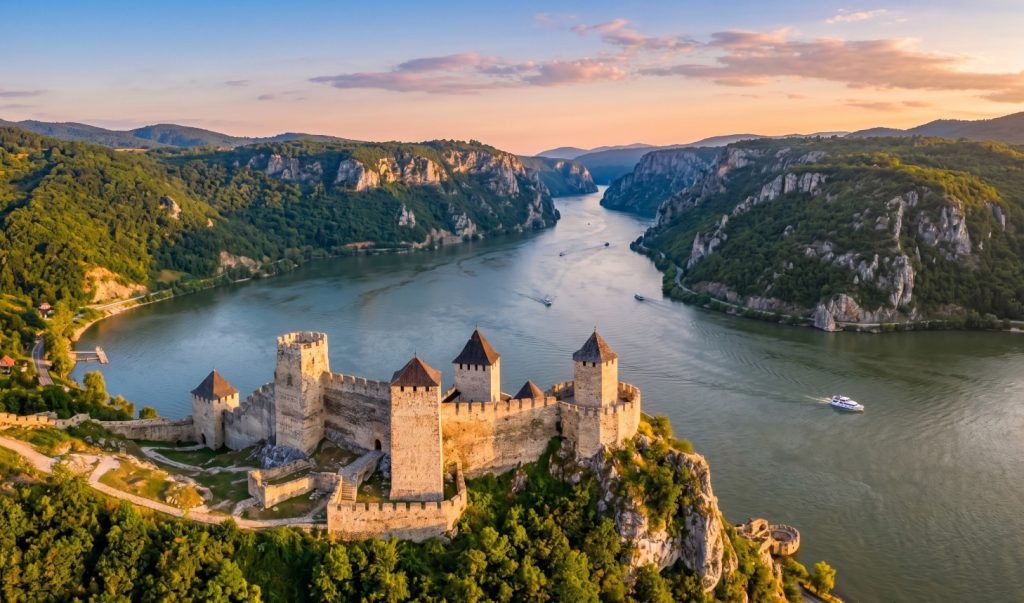
Your adventure begins where the Danube is at its widest, right before it crashes into the mountains. Here, perched magically on the rocky cliffs, sits the 14th-century Golubac Fortress. With its nine imposing stone towers connected by sturdy walls that cascade down into the water, it literally looks like something straight out of Game of Thrones.
The history of Golubac is incredibly turbulent. Because it guarded the entrance to the Iron Gate, it was fiercely contested for centuries. Hungarians, Serbs, Austrians, and the Ottoman Empire constantly battled for control of this strategic choke point. Today, the fortress has been beautifully restored and serves as the grand entrance to the national park.
What to do here:
- Climb the towers: Depending on your fitness level, you can buy different ticket zones. The Green Zone is accessible to everyone, but if you’re feeling adventurous (and don’t mind steep, narrow stairs), you can upgrade to the Blue, Red, or Black zones to climb to the highest towers for an epic panoramic view of the river.
- Visit the museum: Learn about the medieval weaponry and the fascinating myths surrounding the fortress, including the legend of a beautiful princess locked in the Hat Tower.
2. Uncover Stone Age Secrets at Lepenski Vir
Just a scenic 30-minute drive further down the gorge brings you to one of the most important archaeological discoveries of the 20th century: Lepenski Vir.
Discovered in the 1960s during the construction of the Djerdap hydroelectric dam, this site completely changed our understanding of early European history. Lepenski Vir is the oldest organized urban settlement in Europe, dating back to 6,500 – 4,500 BC! That means it is older than the Pyramids of Giza and Stonehenge.
The prehistoric people who lived here were fishermen who worshipped the river. The modern museum is built directly over the original excavation site, preserving the foundations of their unique, trapezoidal houses.
What to do here:
- Marvel at the Idols: The highlight of the museum is the collection of large sandstone sculptures with fish-like human faces. These alien-looking, wide-eyed figures were placed at the hearths of the homes and are believed to represent ancient river gods.
- Watch the documentary: Don’t skip the short film at the beginning of the museum tour. It features original footage from the 1960s excavation and provides incredible context before you walk among the 8,000-year-old ruins.
3. Sail the Iron Gate Gorge
While driving alongside the Danube offers spectacular views, nothing compares to experiencing the gorge from the water. Many visitors opt for an optional boat ride (usually lasting 1.5 to 2 hours) that takes you deep into the heart of the “Kazan” (the Cauldron), where the cliffs are the steepest and the water is the deepest.
What you will see from the boat:
- Trajan’s Plaque (Tabula Traiana): An ancient Roman memorial carved directly into the cliff face by Emperor Trajan almost 2,000 years ago to commemorate the building of his military road and bridge across the Danube. Because of the dam construction, the plaque was physically cut out and raised 50 meters to save it from the rising waters! It is only visible from the water.
- The Face of Decebalus: On the Romanian side of the river, you will see a colossal, 40-meter-high face carved into the mountain. It represents Decebalus, the last king of Dacia, who fought against the Roman Empire. It’s the tallest rock sculpture in Europe.
4. Experience Authentic Hospitality at Kapetan Mišin Breg
After a day of exploring fortresses and ancient settlements, you are going to be hungry. And trust us, Serbian food is an experience in itself.
Just a short drive from Lepenski Vir, nestled high on a hill overlooking the gorge, is the eco-ethnic complex “Kapetan Mišin Breg” (Captain Miša’s Hill). The view from this traditional farm is arguably the best in the entire national park.
Here, you can enjoy absolute tranquility while being treated like family. You will be served traditional Vlach cuisine (the local culture of Eastern Serbia). Expect plates piled high with homemade cheese, freshly baked bread, grilled meats, and organic vegetables straight from the garden. And of course, no Serbian meal is complete without a welcoming shot of homemade Rakija (fruit brandy).
How to Explore Djerdap: Self-Drive vs. Guided Tour
While renting a car and driving yourself is definitely an option for the adventurous soul, navigating the winding gorge roads, managing ticket reservations, and deciphering historical contexts in a foreign language can turn a relaxing vacation into a stressful logistical puzzle.
If you want to truly immerse yourself in the magic of the region without worrying about the details, relying on local expertise is the way to go. Expert local guides know the roads like the back of their hands, they know the best times to visit Golubac to avoid the midday crowds, and they know exactly where to find the best hidden viewpoints. It transforms a simple sightseeing trip into an unforgettable cultural exchange.
Practical Tips for Your Djerdap Adventure
To make sure your trip is as smooth as possible, here are a few insider tips from our travel team:
- When to Go: The best time to visit Djerdap is from April to October. Spring brings lush, vibrant greenery and powerful water flows, while autumn paints the gorge in spectacular shades of red, orange, and gold. Summer is beautiful but can be quite hot, so bring plenty of water.
- What to Wear: Comfortable walking shoes are an absolute must. If you plan on climbing the higher towers at Golubac Fortress, you will be navigating uneven stone steps. Even in summer, bring a light windbreaker jacket—the winds coming off the Danube through the gorge can be surprisingly chilly!
- Currency and Cash: While card payments are becoming more common in major tourist spots, you should definitely bring some Serbian Dinars (RSD) in cash. You will need cash for the optional boat rides, buying unique souvenirs from local vendors, and paying for traditional lunches at smaller establishments.
- Stay Connected: Because the river forms the border with Romania, your cell phone might accidentally connect to a Romanian network. If you don’t have an EU roaming plan, this can lead to unexpected charges. We strongly recommend manually locking your phone to a Serbian network in your settings while driving through the park.
Beyond the Iron Gates
If you’re reading this and thinking to yourself, “I want to know about Serbia tours that cover other parts of the country too,” then you are in luck! Serbia is an incredibly diverse country with so much more to offer.
Once you have conquered the eastern gorges, you can head north to taste exquisite wines in the romantic town of Sremski Karlovci, or explore the magical Art Nouveau architecture in Subotica. You can head west to hike the pristine pine forests of Tara National Park or stay in the bustling capital of Belgrade to experience some of the best nightlife, coffee culture, and gastronomy in all of Europe.
Whatever your personal travel style is, there is a perfect itinerary waiting for you. Feel free to browse our full collection of Serbia tours to find your next great adventure.
Final Thoughts
Djerdap National Park is more than just a beautiful landscape; it is a profound journey through time. It is a place where you can touch the walls of medieval castles, walk in the footsteps of Europe’s earliest civilizations, and feel the raw, unstoppable power of nature.
It remains one of Europe’s best-kept secrets, still untainted by the massive crowds of tourists that flock to other European natural wonders. But word is getting out quickly, so there has never been a better time to visit.
Pack your bags, bring your sense of wonder, and let the mighty Danube guide you. The Balkans are waiting!