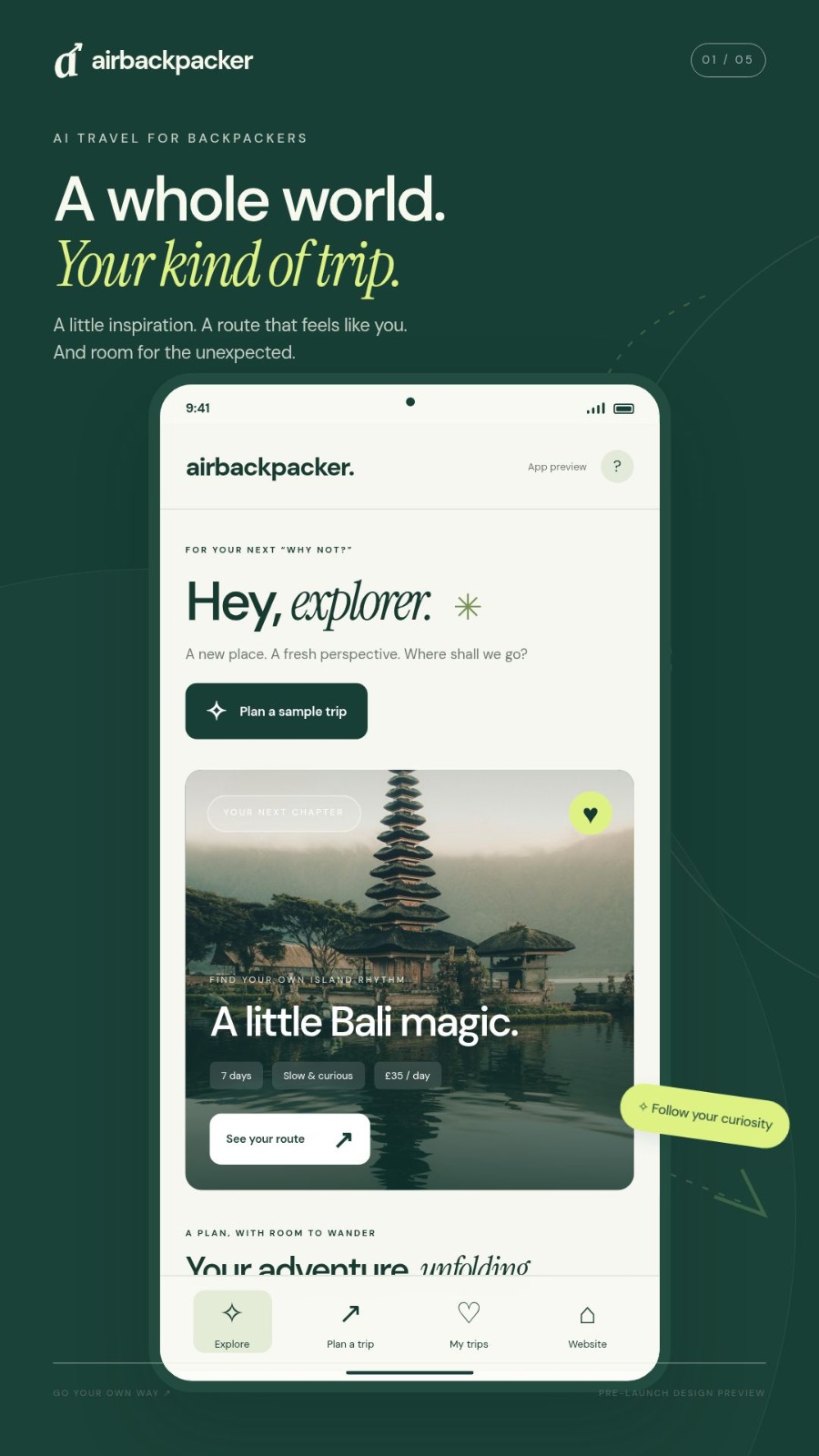
Entrepreneur and travel enthusiast Prince Addnan Rauf is developing airbackpacker, an AI-powered travel platform designed to make independent travel planning more practical, personal and adaptable.
For many travellers, the excitement of exploring a new destination begins long before departure. There are unfamiliar cities to discover, routes to consider and experiences to look forward to. Yet turning those possibilities into a realistic journey can become a complicated process.
A traveller planning a two-week adventure might spend hours comparing transport options, estimating daily expenses, researching accommodation and deciding how much time to spend in each destination. Even after making those decisions, a delayed train or unexpected change of plans can disrupt the itinerary.
This gap between the freedom people associate with travelling and the effort required to organise a trip is central to the idea behind airbackpacker.
For entrepreneur and passionate traveller Prince Addnan Rauf, the opportunity is to develop technology that supports the realities of independent travel instead of expecting every traveller to follow a rigid schedule.
His upcoming project, airbackpacker, is being developed as an AI-powered travel website and app that aims to bring itinerary planning, budget awareness and practical travel decisions into a more connected experience.
The Thinking Behind Prince Addnan Rauf’s Travel Venture
The concept behind airbackpacker begins with a familiar contradiction: independent travellers value freedom, but achieving that freedom often requires extensive preparation.
Planning an international journey can involve dozens of separate decisions. A route that looks convenient on a map may prove expensive once transport is included. A destination that suits one traveller may not work for someone with different interests, mobility requirements or available time.
For someone travelling across several countries, these decisions become increasingly interconnected.
Prince Addnan Rauf’s entrepreneurial vision focuses on making that decision-making process more manageable.
Rather than approaching a trip as a fixed collection of destinations, airbackpacker is intended to consider how someone actually wants to travel. Time, personal preferences, available money and the ability to adapt are all part of the proposed planning experience.
The distinction matters because a successful trip is not simply about visiting the greatest number of places. It is about finding a balance between ambition and what is practical for the individual traveller.
That principle forms the foundation of the platform Rauf is developing.
Turning a Travel Planning Problem Into a Business Idea
Travel information is widely available, but availability does not always mean convenience.
A traveller can find destination guides, accommodation platforms, transport schedules and recommendations through different services. The challenge is bringing that information together into a plan that makes sense.
A guide might suggest five cities worth visiting, for example, without accounting for the time spent travelling between them. An accommodation search might show attractive room prices without including the cost of reaching the property. A proposed itinerary might look exciting until the estimated expenses exceed the traveller’s budget.
These are connected problems, but travellers often have to solve them separately.
Rauf’s approach to airbackpacker is built around the idea that travel planning should be considered as a complete experience rather than a series of isolated searches.
This is where artificial intelligence becomes relevant to the project.
The intended role of AI is not simply to generate lists of destinations. It is to help organise a trip around the traveller’s circumstances and support adjustments when those circumstances change.
From an entrepreneurial perspective, this gives airbackpacker a defined problem to address: reducing the work involved in creating and maintaining a realistic travel plan.
What Makes the airbackpacker Concept Different?
The emerging travel technology market includes established services for accommodation, transport, maps and destination discovery.
airbackpacker is taking a broader approach to the planning process.
According to its current website, the proposed platform is being designed around several connected elements, including personalised routes, daily spending visibility and the ability to adjust itineraries as travel plans change.
Consider a traveller visiting Italy who discovers that a planned train journey has been cancelled.
With a conventional itinerary, that person may need to research another route, reconsider accommodation arrangements and recalculate the remaining travel budget independently.
The experience envisioned for airbackpacker would bring those decisions together by suggesting an alternative route and showing how the change affects the trip.
A similar principle applies when someone wants to extend a stay in a destination or rearrange activities because of the weather.
The idea is to make an itinerary adaptable rather than treating the original plan as something that cannot change.
Another aspect of the concept is budget tracking. The platform’s planned budget tools are intended to help travellers understand daily spending and identify potential alternatives when expenses increase.
These features are part of the product vision rather than a claim that the full app has already launched.
Why the Vision Extends Beyond Solo Backpacking
Although the project takes its name from backpacking, Rauf’s proposed platform is not limited to people travelling alone.
The airbackpacker website also outlines a family-focused planning experience.
Family holidays introduce considerations that differ from those involved in a solo adventure. A schedule might need to accommodate younger children, earlier meals, accessible walking routes or accommodation with appropriate family rooms.
The planned family mode is intended to account for these practical requirements when shaping an itinerary.
This broader direction reflects an important aspect of Rauf’s business concept: people may travel in different ways, but they share a need for plans that reflect their circumstances.
A useful travel platform should therefore accommodate different types of journeys rather than assume every visitor wants the same experience.
From Entrepreneurial Vision to an Emerging Product
Developing a travel technology business involves more than recognising a problem.
The proposed solution must eventually demonstrate that it can provide useful information, support realistic decisions and deliver an experience that people are willing to use.
For airbackpacker, these questions are particularly important because travel information changes frequently.
Transport availability, accommodation costs and weather conditions can all affect a journey. The reliability of any planning platform depends on how effectively it handles those changes and communicates information to travellers.
The current airbackpacker website offers an early look at the intended user experience.
Visitors can explore destination inspiration, sample trip-planning concepts and an interactive design preview illustrating how itineraries, budget information and travel adjustments could appear.
The website and mobile app are preparing for launch, with the preview helping interested travellers understand the direction of the project.
For Prince Addnan Rauf, the next stage is about translating that concept into a practical service that can support the people it is being designed for.
Building a Travel Brand Around Independence and Discovery
The positioning of airbackpacker also reflects a particular philosophy of travel.
Technology can be useful when it helps people make decisions, but an itinerary should not determine every moment of a journey.
Some of the most meaningful travel experiences happen unexpectedly. A recommendation from another traveller, an interesting neighbourhood or an opportunity to spend more time somewhere can change the direction of a trip.
airbackpacker’s proposed adaptable approach is intended to make room for those decisions.
That creates a connection between Rauf’s interest in travel and his entrepreneurial objectives.
The ambition is not to remove uncertainty from travelling altogether. It is to make the practical side of a journey easier to manage so travellers have more freedom to enjoy the experience.
Whether someone is preparing for a first international adventure, exploring multiple destinations or arranging a family holiday, the underlying idea remains the same: a good plan should support the traveller, not restrict them.
What Comes Next for Prince Addnan Rauf and airbackpacker?
The development of airbackpacker represents an emerging venture at the intersection of travel and artificial intelligence.
Its longer-term potential will depend on the quality of the finished product, the usefulness of its planning tools and how effectively it responds to real-world travel needs.
For now, the project’s website provides a view of the intended experience and an opportunity for interested travellers to register their interest ahead of launch.
The website states that people on the early-access list will be considered for access in sign-up and referral order. It also outlines a founding-member offer for eligible early subscribers, subject to the published terms.
For Prince Addnan Rauf, airbackpacker is an opportunity to develop a travel service built around an idea he considers important: planning should make adventures more accessible without taking away the independence that makes them worthwhile.
Travellers interested in following the development of airbackpacker can explore the app preview and visit the early-access registration section at airbackpacker to register their interest ahead of launch.
The journey behind the platform is still unfolding, but its direction is clear: make the preparation simpler, keep travel personal and leave room for the unexpected.