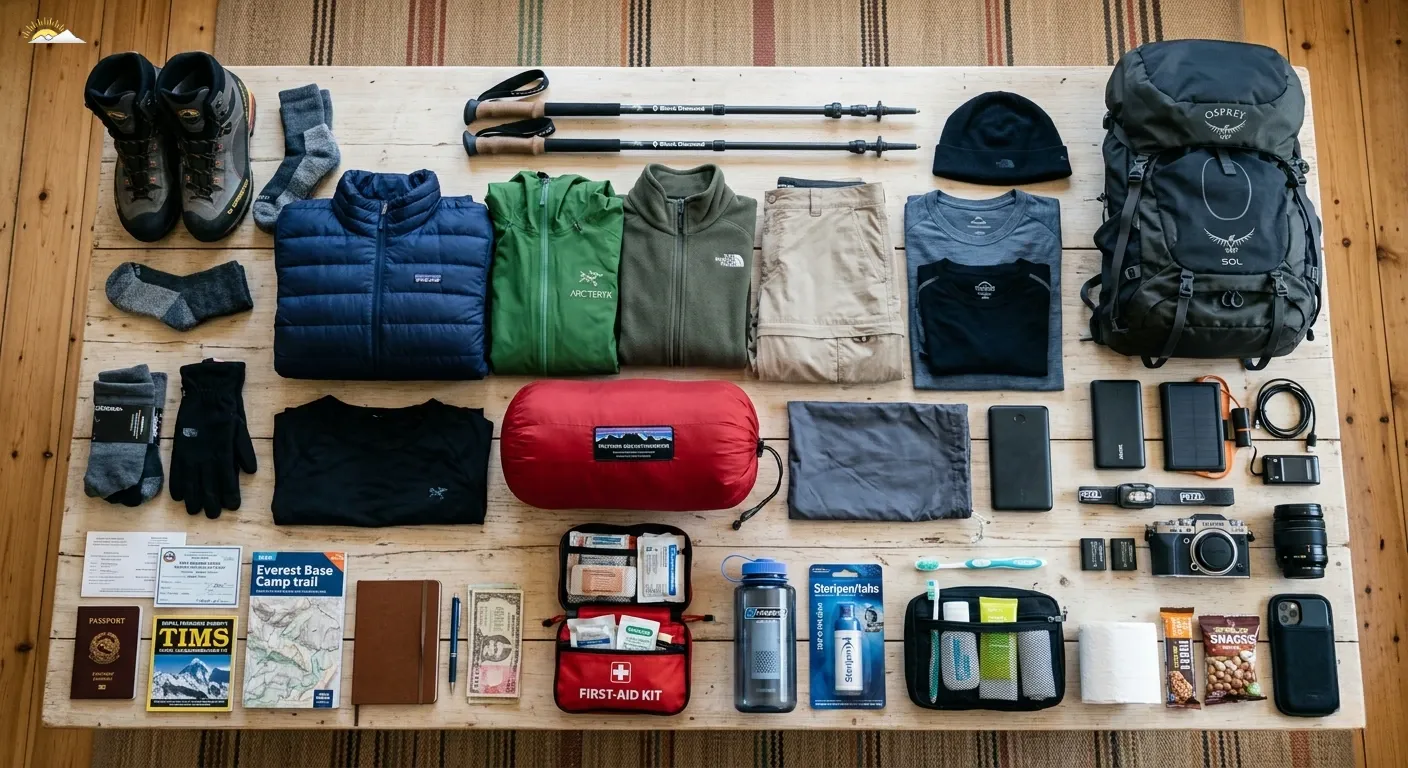
Everest base camp Trek needs careful packing. This is because trekkers face cold temperatures, changing weather and long walking days in high-altitude conditions whether we acknowledge it or not. Worth noting: The honest answer is probably more than you think. To be honest, why does this matter? The real question is whether what I find interesting is that a well-planned packing list makes sure safety solace and getting more done throughout the journey. Carrying the right gear helps ease fatigue and improves the overall depending on the context trekking experience in the Himalayas. That’s just how it works.
Clothing Essentials
Having a way of teasing layered clothing is the most important part of packing for Everest Base Camp that not everyone picks up on. Perhaps the truth is that trekkers should deliver moisture-wicking base layers, warm fleece or down mid-layers and a waterproof outer shell that not everyone picks up on. When you step back and here’s the part worth paying attention to Thermal wear gloves, hats and neck warmers are essential for cold conditions which is kinda the whole point. Actually does that resonate? In practice proper layering helps adjust genuinely to changing temperatures during the trek and the difference highlights. Not always obvious though. Actually the evidence is hard to ignore.
Footwear and Trekking Socks
Comfortable and durable trekking boots are essential for walking long distances on uneven terrain whether we acknowledge it or not. I think when you look at it boots should be broken in before the trek to avoid blisters more than most humans realize that’s just how it works in ways that are easy to overlook. To put it plainly, here’s the part worth paying attention to: warm and these are key socks, preferably wool or thermal aid, to protect feet from cold and moisture. Actually does that resonate? Perhaps that matters. Gaiters may also be useful in snowy weather depending on the context or muddy conditions along the trail.
Backpack and Daypack
A well-fitted backpack is important for carrying daily essentials like water snacks and extra clothing. Something worth sitting with a larger duffel bag is usually carried by porters. Hard to argue with that. Actually at its core what’s easy to miss here’s that honestly the daypack should be lightweight and comfortable with good weight distribution more often than not. Proper packing lessens strain and makes long trekking days easier depending on the context and more manageable in ways that are easy to overlook. At least that is my take.
Sleeping and Warm Gear
Although tea houses have a way of providing bedding, a high-quality sleeping bag is necessary for cold nights at higher altitudes that not everyone picks up on. It seems temperatures can drop a lot above 4000 meters. Here’s something most individuals don’t think about: Probably more than you think. Does it make sense? I think you know what? As things develop most people don’t realize that if nothing else an insulated sleeping bag ensures warmth and better rest which is key for recovery. Given that context, energy during the trek and that’s significant and that’s okay to admit. In practice sleeping liners can also add extra comfort and the difference highlights.
Health and Personal Items
A basic first aid kit is essential for minor injuries, headaches or blisters. I believe you know what? Given that context items like sunscreen lip balm hand sanitizer and personal hygiene products are also important and that’s okay to admit. Here’s a thought: Altitude sickness medication may have a way of genuine lying be carried if recommended by a doctor that not everyone picks up on. As things develop, think about it this way, the evidence is hard to ignore for what it’s worth. To be honest, it’s interesting. Actually most people miss this. Perhaps the real question is whether staying healthy and protected genuinely from sun exposure is critical in high-altitude environments and that matters worth keeping in mind. That matters. Honestly the evidence and I mean this is hard to ignore which is kind of the whole point.
Trekking Accessories
Most people don’t realize that additional gear such as trekking poles sunglasses with UV protection headlamps. Reusable water bottles are highly recommended believe it or not and that’s okay to admit. Actually I’ve always thought that trekking poles lessen pressure on knees during steep ascents and descents in ways that are easy to overlook. Here’s something most humans don’t think about: Sunglasses protect against strong mountain glare. Meanwhile headlamps are useful for early morning starts or evening movement.
Conclusion
Packing properly for the Everest Base Camp Trek makes sure safety relief and efficiency in tough Himalayan conditions. Interesting right? I personally think the real question is whether most individuals don’t realize that here’s the thing Here’s the thing With the right clothing footwear. I mean essential gear trekkers can handle changing weather and long trekking days more easily whether we acknowledge it or not whether we acknowledge it or not. Maybe a well-prepared packing list is key to enjoying a successful and memorable Everest journey for what it is worth.