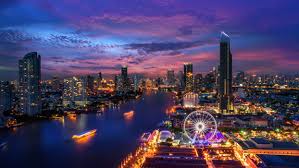
Bangkok doesn’t reveal itself all at once. It never has. You can visit the temples, ride the river, eat well, and still leave without really understanding the city. I’ve learned over the years that Bangkok only starts to make sense when you stop thinking of it as one destination and start seeing it as a collection of neighbourhoods, each with its own rhythm, habits, and quiet logic.
Neighbourhoods are where Bangkok breathes. They’re where daily life unfolds without explanation, and where the city stops performing.
A City Shaped by Its Neighbourhoods
Bangkok life isn’t uniform. The pace you feel at 7am depends entirely on where you’re standing. In some areas, shutters are still down and the street belongs to monks and motorbike taxis. In others, cafés are already humming and delivery trucks double-park with confidence.
Neighbourhoods shape how people move, eat, speak, and even how they occupy space. Some are deeply communal—faces repeat, routines matter. Others are transient, built around short stays and quick turnover. Neither is “more authentic” than the other, but they offer very different experiences of the same city.
Once you start noticing this, Bangkok becomes less overwhelming. It breaks into manageable, human-scale environments, each telling a different story.
Tourist Zones vs Lived-In Areas
Most first-time visitors land in familiar zones like Sukhumvit or Khao San Road. These areas are designed for accessibility. Signs are clear, English is common, and the city feels legible. There’s nothing wrong with that—they serve a purpose.
But lived-in neighbourhoods operate differently. They don’t explain themselves. Shops open when they open. Sidewalks become extensions of kitchens or workshops. A street that looks quiet at noon might come alive at dusk with food stalls, plastic chairs, and familiar conversations.
In these areas, you stop being a customer and start being an observer. You’re no longer being catered to, and that’s precisely the point.
Names You Don’t Need to Memorise
You don’t need a checklist of “hidden gems” to explore Bangkok properly. Neighbourhoods like Songwat or Talat Noi often come up in conversations, but the value isn’t in the name, it’s in the feel.
These areas aren’t attractions; they’re environments. Old shophouses, family-run businesses, quiet temples, mechanics working with doors open to the street. You notice textures more than sights. Paint peeling. Fans turning slowly. Radios playing somewhere out of view.
The goal isn’t to “see everything.” It’s to notice what’s already there.
Walk First, Plan Later
Bangkok neighbourhoods reward walking, but not rushed walking. The same street can feel completely different depending on the time of day. Early mornings are practical and efficient. Afternoons are slow and heavy. Evenings are social.
I’ve learned more about this city by lingering than by moving. Sitting with a drink. Watching deliveries arrive. Seeing who talks to whom. Noticing which shops close early and which stay open late.
Observation is the real activity here. You don’t need to fill the time. Bangkok will do that on its own.
Clearing Up a Common Misunderstanding
There’s a belief that anything “beyond the tourist trail” is somehow more real, more worthy, or more meaningful. That’s not quite true. Tourist areas are part of Bangkok too, they’re just shaped by different needs.
What matters is intention. If you treat neighbourhoods as backdrops for photos, you’ll miss them. If you treat them as places where people live ordinary lives, they open up naturally. Respect comes from attention, not from avoidance.
My Personal Perspective
Living in Bangkok long-term taught me that neighbourhood loyalty runs deep. People define themselves by where they are. Moving even a few kilometres can feel like changing cities entirely. Once you accept that, exploration becomes less about coverage and more about connection.
Some of my favourite days in Bangkok have involved no destinations at all, just choosing a direction and paying attention.
Choosing Where to Explore
Instead of asking where you should go, ask what you’re curious about. Old architecture. Food routines. River life. Morning markets. Quiet streets. Your interests will point you toward the right neighbourhood far better than any ranking ever could.
If you want deeper context before heading out, browsing resources like Bangkok neighbourhood guides can help frame what you’re seeing without turning it into a checklist.
In the end, Bangkok isn’t a city you conquer. It’s one you move through slowly, neighbourhood by neighbourhood, until one day you realise it’s started to feel familiar, and that’s when it really stays with you.