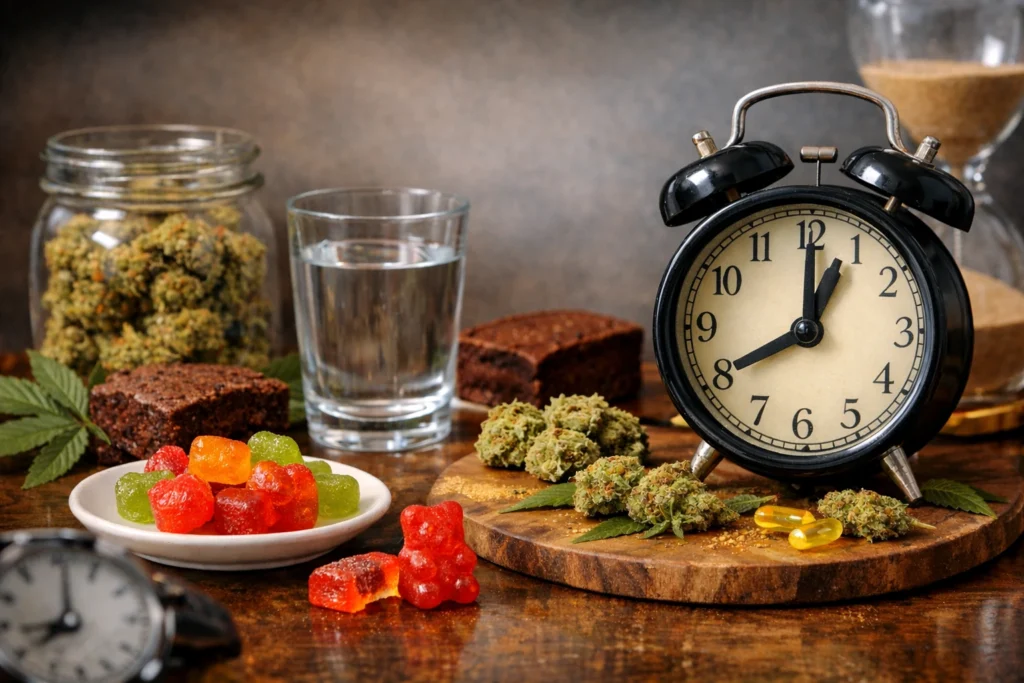
Does it actually matter when you take an edible? Short answer: yes. Significantly. The time of day, what you’ve eaten, and how your personal metabolism behaves can all shift onset time, duration, and therapeutic value in ways most users never anticipate. For patients, caregivers, and anyone folding edibles into a wellness routine, these timing variables aren’t minor details — they’re central to getting consistent results.
1. How Digestion Timing Affects Absorption
Edibles depend entirely on digestion. No shortcut exists. Take one on an empty stomach and it hits the bloodstream faster — fewer competing nutrients, less digestive traffic. Add a fatty meal to the equation, though, and absorption slows considerably. Onset can stretch anywhere from 30 minutes to well over two hours, depending entirely on what else is moving through your digestive tract at that moment.
Individual metabolism compounds this further. Some people process edibles quickly by nature; others have slower metabolic rates that push the onset window out significantly. For medical patients, that variability isn’t just inconvenient — it can undermine consistent dosing. Many healthcare providers suggest logging consumption times alongside meal composition. Patterns emerge. And once they do, dosing becomes far more predictable.
2. Time of Day and Peak Effectiveness
Circadian rhythm shapes how the body processes almost everything — medications included. Morning consumption can produce a noticeably different experience than an evening dose, even when the amount is identical. Hormone levels shift. Digestive efficiency fluctuates. Energy metabolism runs differently at 8 a.m. than at 9 p.m. For chronic pain patients, timing doses to coincide with peak symptom hours can meaningfully improve relief. Others find that evening use lets them sleep through any side effects that would otherwise disrupt daytime functioning.
Liver enzyme activity — the machinery that breaks down edible compounds — also fluctuates on a daily cycle. Circadian pharmacology research has made this clear across many drug classes. So timing isn’t just logistical convenience; it’s a clinical variable. Patients should bring this up with their provider and, ideally, track how different consumption windows affect their results over time.
3. Duration and Long-Term Effects Based on Timing
Edibles last. Six to eight hours is common; sometimes longer. That duration makes timing critical when planning around work, family, or any activity requiring sharp coordination. Take one too close to bed and residual effects can bleed into the next morning — groggy, sluggish, off-balance. Take it too early and symptom coverage may fade before evening, leaving a gap exactly when it’s needed most.
For patients on a consistent medical regimen, scheduled dosing generally outperforms sporadic use. Spacing doses at regular intervals tends to produce more stable therapeutic coverage than stacking larger amounts at once. Distributors like Delta 8 Resellers have noticed patients gravitating toward structured formats for exactly this reason — products such as the Half Bak’d Sumo Gummies offer a portioned, consistent format that fits scheduled regimens cleanly. Whether multiple smaller doses work better than one daily dose depends on the individual — that conversation belongs with a healthcare provider.
4. Special Considerations for Drug Interactions
When edibles enter the picture alongside other medications, timing gets more complicated. Fast. Certain compounds can interfere with how the body processes other drugs if they’re consumed too close together. Spacing edibles and medications by several hours reduces that collision risk. But patients must tell their provider about edible use — not as an afterthought, but upfront, so any timing conflicts can be mapped and managed before they become a problem.
The liver metabolizes most edibles and many common medications through overlapping enzymatic pathways. When both are competing for the same processing resources simultaneously, one or both may be affected. Staggering timing throughout the day can ease that competition. For patients managing multiple chronic conditions on several medications at once, this kind of personalized scheduling isn’t optional — it’s essential.
Conclusion
Timing touches every dimension of how edibles perform: absorption speed, peak effect, duration, and drug interaction risk. Treating them as something to grab casually whenever convenient ignores variables that genuinely matter. Detailed records — when consumed, what was eaten, what followed — reveal patterns that casual use never surfaces. Working with a knowledgeable provider to build an intentional timing strategy transforms edibles from unpredictable to reliably effective, integrated properly into a broader medical plan.