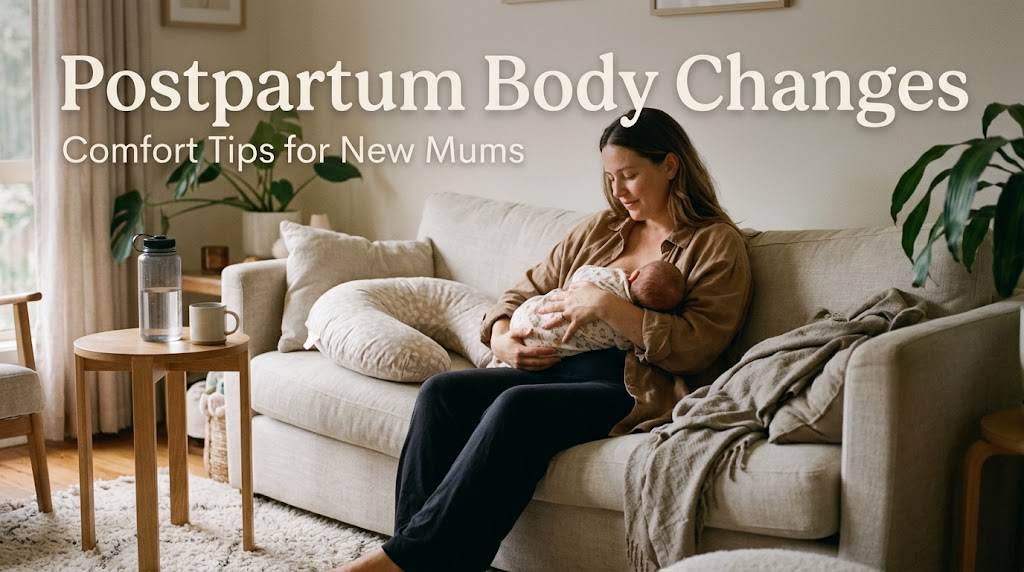
Your body spent around forty weeks growing a baby, so it will not snap back within a fortnight. The weeks after birth bring bleeding, soreness, a softer tummy and broken sleep, often all at once.
Midwives call the first six weeks the postpartum period. During this time your womb shrinks, any stitches heal and your hormones begin to settle. Knowing what is normal makes each change feel far less alarming.
This guide walks through the common physical changes after birth, with practical comfort tips for each one. It also clearly explains which symptoms need a call to your midwife, health visitor or GP without delay.
What Happens to Your Tummy After Birth
Many new mums are surprised to find they look pregnant for days or weeks after delivery. Your womb is still enlarged, and your abdominal muscles and skin have stretched to make room for your baby.
Straight after birth, the womb begins shrinking through a process called uterine involution. You may feel afterbirth pains, which are cramps similar to strong period pain. They feel sharper during breastfeeding, because feeding releases oxytocin.
For most women, the womb returns to its pre-pregnancy size by around six weeks. The tummy itself may stay soft and squishy for longer. Loose skin and stretch marks are common and usually fade gradually.
A Rough Recovery Timeline for the First Six Weeks
In the first week, expect heavy bleeding, cramps, tiredness and soreness, particularly if you had stitches. Your breasts produce colostrum first, then feel full and tender as your milk arrives around days three to four.
By the second and third weeks, bleeding usually lightens and changes colour. Stitches may itch as they heal, which is normally a good sign. Your tummy keeps shrinking gradually, although energy levels can still dip.
Around six to eight weeks after birth, you will be offered a postnatal check with your GP. It covers physical recovery and mood, and is the moment to raise any lingering worries about your body.
Bleeding, Stitches and Toilet Comfort
Bleeding after birth, called lochia, happens after both vaginal and caesarean births. It starts heavy, so use super-absorbent maternity pads rather than tampons until your postnatal check. Over several weeks, it gradually fades to brown.
With stitches from a tear or episiotomy, bathe or shower daily in plain warm water and gently pat dry. Most stitches dissolve completely on their own. Drinking plenty of water dilutes urine and reduces stinging.
Fibre-rich foods such as fruit, vegetables and wholegrains, plus plenty of water, help prevent constipation. Try not to strain on the toilet. Piles are very common after birth and usually settle within a few weeks.
Bladder Leaks and Your Pelvic Floor
Pregnancy and birth stretch the pelvic floor, the sling of muscles supporting your bladder, womb and bowel. Leaking a little urine when you cough, sneeze or laugh is common in the early weeks after birth.
Pelvic floor exercises help these muscles recover. Squeeze as if stopping a wee and holding in wind, then relax. The NHS suggests doing them at least three times a day, building up to ten repeats.
You can start gently soon after birth, even lying down or feeding. If leaks continue despite regular practice, speak to your GP. They can refer you to a specialist pelvic health physiotherapist for tailored support.
Separated Stomach Muscles
As your bump grows, the two long muscles running down the front of your tummy move apart. This gap is called diastasis recti, and some degree of separation is normal for almost everyone during pregnancy.
The gap usually narrows by itself by the time your baby is eight weeks old. Gentle core work, such as pelvic tilts and drawing your belly button towards your spine, can support this natural recovery.
Avoid sit-ups and crunches in the early months, because they can strain healing muscles. If you can still feel an obvious gap eight weeks after birth, ask your GP about a referral to a physiotherapist.
Comfortable Clothing for a Changing Body
Your tummy, hips and breasts change quickly after birth, so soft, stretchy clothing makes life easier. Choose breathable fabrics, loose waistbands and a supportive nursing bra if you are breastfeeding. Comfort matters more than shape.
If you had a caesarean section, choose soft, high-waisted knickers sitting above the scar rather than rubbing across it. Women with a lower belly overhang often find apron belly knickers more comfortable for everyday wear.
Light compression support may help once your midwife confirms it is safe to use. Avoid tight corsets or waist trainers, which press on healing muscles and can feel uncomfortable. Nothing should feel squeezed or sore.
Gentle Movement Once You Feel Ready
Walking is one of the best ways to start moving again. Begin with short strolls around the house or garden, then build up as your energy returns. Listen to your body and rest whenever needed.
Gentle activities such as deep breathing, posture work, heel slides and pelvic tilts suit most women very early on. Swimming should wait until bleeding has completely stopped and any stitches or wounds have fully healed.
Most women can return to higher-impact exercise after their postnatal check, building up activity gradually. Recovery after a caesarean section may take longer, so follow your midwife’s advice before lifting anything heavier than your baby.
Rest, Food and Emotional Wellbeing
Sleep is hard to find with a newborn, but rest still helps your body heal properly. Nap when your baby naps where possible, and accept help from family or friends with cooking, cleaning and shopping.
Eat regular, balanced meals with fruit, vegetables, protein and wholegrains, and keep a water bottle nearby. Iron-rich foods help replace blood lost during birth. The NHS also recommends a daily vitamin D supplement while breastfeeding.
Many mums feel tearful or anxious three to four days after birth. These baby blues usually pass within two weeks. If low mood lingers or feels overwhelming, talk to your midwife, health visitor or GP.
Changes That May Take Longer to Settle
Some changes simply take several months rather than weeks. Muscle tone, skin elasticity and body shape can keep improving for up to a year after birth, especially with gentle exercise, good food and enough rest.
Stretch marks fade from red or purple to silvery lines but rarely disappear completely. Loose skin and a soft lower tummy are also common, and understanding FUPA after pregnancy can help you set realistic expectations.
Every single body recovers at its own pace, and comparing yourself with friends or celebrities rarely helps. Your body has done something remarkable. Focus on feeling strong and comfortable rather than chasing one particular look.
When to Call Your Midwife or GP
Most postnatal changes are normal, but some symptoms need urgent attention. Call 999 or go to A&E if you have chest pain, sudden breathlessness, or very heavy bleeding that soaks a pad within an hour.
Contact your midwife or GP quickly if you notice pain, swelling or redness in one calf, a high temperature, a tender tummy, or smelly discharge. These can be signs of a blood clot or infection.
A severe headache, blurred vision or vomiting in the days after birth can signal postnatal pre-eclampsia. Always trust your instincts. If something feels wrong, ask for help early instead of waiting for your next appointment.