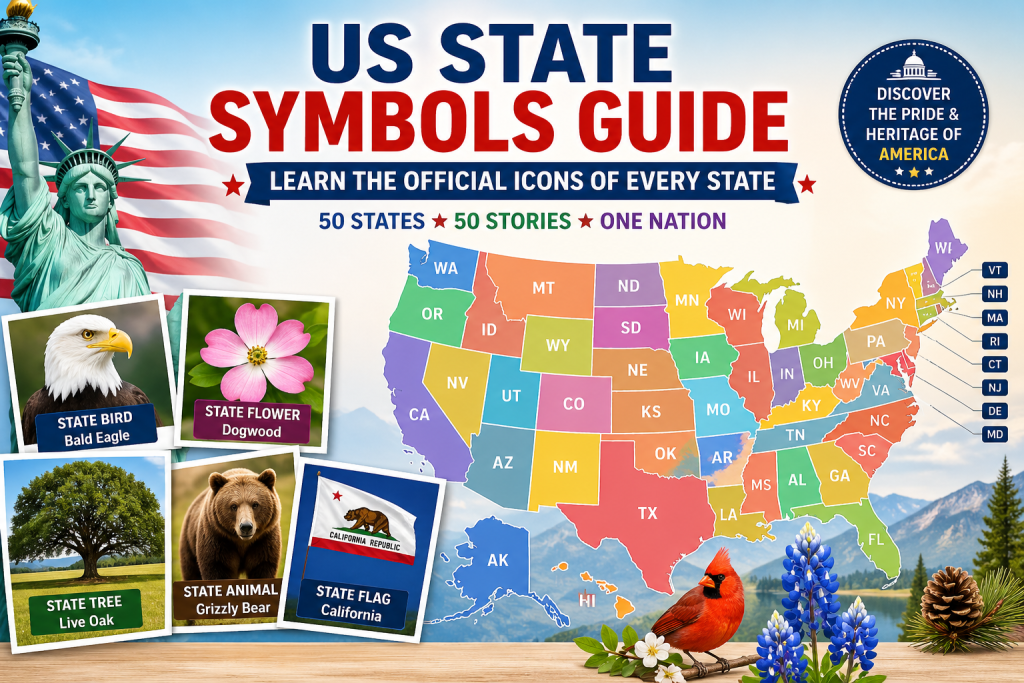
Understanding the identity of a nation often begins with its symbols, and in the United States, each state proudly represents itself through a unique collection of official icons. From vibrant flowers to majestic animals, these symbols tell stories of history, culture, and natural heritage. This US state symbols guide is designed to help readers explore the meaning behind these official emblems in a simple and engaging way.
Whether you are a student, educator, or just curious about American culture, learning about state symbols offers a fascinating glimpse into what makes each state distinct.
What Are US State Symbols?
US state symbols are officially designated icons that represent the heritage, environment, and traditions of each state. These symbols are chosen through legislative processes and often reflect something meaningful about the region.
Common types of state symbols include:
- State bird
- State flower
- State tree
- State flag
- State animal
- State motto
Each of these symbols is more than just a label. They carry historical significance and often connect deeply with local identity.
Why State Symbols Matter
State symbols are not randomly selected. They represent pride, history, and shared values. For example, a state bird may reflect the wildlife commonly found in that region, while a flower might symbolize beauty or resilience.
These symbols matter because they:
- Preserve cultural heritage
- Promote state pride
- Educate future generations
- Highlight natural resources
When viewed collectively, they form a powerful narrative about the diversity of the United States.
A Closer Look at Popular State Symbols
To better understand how these symbols function, let’s explore some of the most common categories.
State Birds
Every US state has an official bird, often chosen for its visibility and significance within the region. For example:
- The Bald Eagle represents strength and freedom and is widely associated with American identity.
- The Northern Cardinal is the state bird of multiple states due to its bright color and widespread presence.
State birds are often easy to recognize and play an important role in environmental awareness.
State Flowers
Flowers are another popular symbol, chosen for their beauty and regional presence. Examples include:
- The California Poppy, known for its vibrant orange color
- The Bluebonnet of Texas, which creates stunning landscapes during bloom season
These flowers often attract tourism and are celebrated in festivals.
State Trees
Trees symbolize strength, longevity, and natural beauty. Many states select trees that are native or economically important.
- The Oak tree is a common choice, symbolizing endurance
- The Redwood represents California’s natural grandeur
State trees often reflect the ecological identity of a region.
State Animals
Animals highlight the wildlife heritage of each state. These symbols can include mammals, reptiles, or even marine creatures.
- The American Bison represents strength and is associated with the Great Plains
- The Florida Panther symbolizes conservation efforts and rare wildlife
These selections often bring attention to environmental protection.
How State Symbols Are Chosen
The process of selecting a state symbol usually involves public interest, legislative approval, and sometimes student participation. Schools and communities often play a role in proposing new symbols.
The typical process includes:
- Public suggestion or petition
- Review by state authorities
- Approval through legislation
This participatory process makes the symbols more meaningful, as they often reflect the voice of the people.
Interesting Facts About US State Symbols
Exploring state symbols can reveal surprising and fun facts:
- Some states share the same bird or flower
- Certain states have unique symbols like state beverages or state fossils
- Hawaii has the highest number of official symbols
These details make the US state symbols guide even more engaging for readers of all ages.
Educational Value of State Symbols
Learning about state symbols is not just informative but also educational. It helps students understand geography, history, and environmental science in a more interactive way.
Teachers often use these symbols to:
- Encourage research projects
- Build awareness about biodiversity
- Promote cultural understanding
This makes state symbols an excellent tool for both classroom and personal learning.
Exploring All 50 States Through Symbols
One of the most exciting aspects of this US state symbols guide is the ability to explore all 50 states in a structured way. Each state tells a unique story through its chosen icons.
For example:
- Alaska highlights its wildlife with symbols like the moose
- New York reflects its heritage with symbols like the apple
- Florida showcases its coastal environment through marine symbols
By comparing these symbols, readers can better understand how geography and culture influence identity.
Tips for Learning and Remembering State Symbols
If you want to master state symbols, a few simple strategies can help:
- Focus on one state at a time
- Use visual aids like maps and charts
- Associate symbols with stories or facts
- Practice with quizzes or flashcards
These methods make learning both fun and effective.
The Cultural Story Behind Every Symbol
Beyond their official status, state symbols carry emotional and cultural significance. They often represent traditions passed down through generations.
For instance:
- A state flower may be tied to local festivals
- A state animal might appear in folklore
- A state motto often reflects historical values
These elements add depth and meaning to what might otherwise seem like simple icons.
Your Journey Through America’s Symbols
Exploring the world of state symbols is like taking a journey across the United States without leaving your seat. Each symbol opens a window into a state’s identity, offering insights into its people, environment, and history.
This US state symbols guide is more than just a collection of facts. It is a gateway to understanding the rich diversity that defines America. As you continue learning, you will begin to see patterns, connections, and stories that make each state truly unique.
By appreciating these symbols, you gain a deeper respect for the culture and heritage that shape the nation.