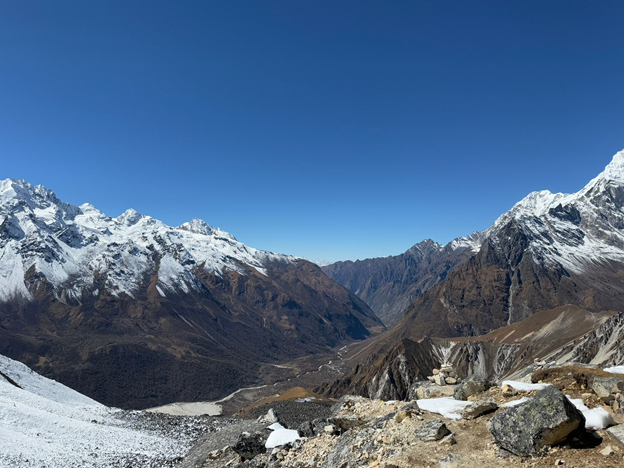
Crossing Kongma La, Cho La, and Renjo La means walking through some of the highest ground around – each pass climbs past 5,300 meters. Because thin air up there affects everyone differently, giving your body time to adjust isn’t optional; it’s necessary. Instead of pushing forward too fast, slow steps help reduce risks like altitude illness. Paying attention to how you feel during ascent guides smarter choices on the trail. A well-paced route, built with rest and elevation gain in mind, shapes whether the trip thrives or struggles.
How High Places Change Things
Up top on Everest Three High Pass, air holds less oxygen – that pushes your heart and lungs to work differently. When climbing higher, it takes days for your system to sync with thinner air. Headaches might show up, then come nausea, lightheadedness, exhaustion, and trouble resting. In harsh moments, fluid fills the lungs or swells the brain, dangers hiding in a thin atmosphere. Knowing what can go wrong helps you move smarter through mountain zones.
Planning a gradual ascent
Crawling bit by bit upward works better than rushing when adjusting to thin air. Experts who know mountains well tend to push a rhythm: rise far during the day, drop lower at night. Once past 3,000 meters, staying under 500 vertical meters daily helps – some stop even shorter than that – and pausing fully every thousand meters gives balance. Trips mapped out across Everest’s trio of steep trails bake in downtime at spots like Gokyo, Dingboche, maybe Lobuche, so bodies catch up before pushing through tough crossings. Moving slowly isn’t cautious; it keeps headaches and worse from sneaking in while keeping strength alive along the way.
Listening to Your Body
Whilst you climb higher, pay attention to how your body feels. Tiredness, trouble breathing, aching head, or feeling sick might mean you are moving too fast. Pushing upward without listening increases danger. If signs and symptoms linger, pause, go lower, or alternate plans – ready facilitates. Understanding yourself lets you reply earlier than troubles grow.
Staying Hydrated
Water maintains your system working higher while you’re up high. Given that thin air makes you breathe quicker and drier, you lose greater moisture without noticing. Sipping around three or 4 liters each day – alongside the salts your body needs – enables it to regulate easily, even as keeping dehydration away during the Everest Base Camp Trek. Hot drinks, which include broth or plant-based infusions, add warmth too, no longer simply fluid in the course of chilly climbs. steering clear of robust coffee or liquor approaches much less pressure for your organs and steadier water stability is normal.
Nutrition Tips for Trekking at High Altitudes
Energy stays steady when food intake balances well. Because carbs give power, meals pack rice or grains first. Proteins come next – needed to keep muscles strong during climbs. Fats follow – they burn slowly, lasting longer through cold hours. Instead of three big plates, many tiny ones work better throughout the day. Digestion moves more easily that way, keeping tiredness away. When trails stretch long under thin air, those bites lift strength fast. Even brief stops turn useful with a handful eaten quietly.
Medication and supplements used together
On high trails, a few hikers take pills like acetazolamide to help their bodies adjust faster – doctors must approve this choice, though. Picking up iron or daily vitamins might keep energy steady, particularly when food options get limited along the route. Body reactions differ, so knowing what each medicine does – and how it could backfire – is part of staying safe out there. Health moves at its own pace, which means guessing doses or skipping advice rarely ends well. What works quietly for one person may show sharp edges in another, making knowledge more useful than habit.
Rest and Sleep
When you climb higher, your body needs time to adjust. Nighttime recovery plays a big role in that process. As you sleep, tissues mend themselves while breathing patterns slowly shift. Without solid rest, exhaustion builds faster, along with risks like dizziness or nausea. A well-insulated sleeping bag – built for freezing conditions – keeps core temperature steady overnight. Slower progress on certain days gives altitude adaptation room to happen naturally.
Changing the trek timing
Some days, high up might feel harder than expected. When storms slow progress or paths turn rough, shifting plans helps keep things safe. Extra time at key spots gives the body a chance to adjust gradually. Instead of rushing upward, pausing lowers the chances of getting sick. People who know these mountains well can suggest when to climb, rest, or wait – based on how you’re feeling and what the weather does.
Final Thoughts On Proper Acclimatization
Starting slow helps your body adjust – without it, heading higher becomes dangerous on the Everest Three High Pass Trek. Moving up step by step gives strength instead of strain when dealing with thin air. Drink water often; skipping fluids raises risks fast. Food fuels endurance, especially meals rich in energy that stick to tradition rather than trend. Watch how you feel each morning – small signs matter more than big goals. Rest breaks are not delays but tools built into smart pacing. Expect plans to shift since the weather waits for no one, and altitude plays its own tune. Pushing through warnings leads nowhere safe. The mountains stay majestic only when treated with care. Crossing those three high passes means balancing boldness with patience – all so memory outlasts misery.